Hindi Varnamala with Pictures: Screen-Free Montessori Guide
Teaching hindi varnamala with pictures using a screen-free Montessori approach actively supports early literacy and cognitive development in Indian children, providing a foundational pathway to language mastery. Child development experts agree that multisensory engagement is crucial for effective learning, making this method ideal for young learners. This comprehensive guide empowers parents to foster a love for Hindi in their children through engaging, hands-on activities at home.
In many Indian homes, parents are actively seeking alternatives to digital screens for their children's education and development. With reports highlighting concerns about screen time impacting kids' attention and even leading to autism-like symptoms, the need for effective, screen-free learning methods has never been more urgent. Especially when it comes to fundamental skills like mastering the Hindi Varnamala, a culturally vital aspect of an Indian child's upbringing.
This post delves into how a Montessori approach, rich with tangible materials and playful interactions, can transform Hindi Varnamala learning into an exciting journey. It’s about more than just recognizing letters; it's about connecting with one's heritage and developing crucial cognitive skills away from the glowing screen.
What is Montessori Hindi Learning?
Montessori Hindi Learning is an educational method that introduces the Hindi Varnamala through hands-on, self-directed activities using specially designed materials. This matters because it fosters intrinsic motivation, deep understanding, and prepares children for reading and writing in a culturally relevant way. Indian parents can implement this by providing a prepared environment with engaging, tangible learning tools.
The Power of Screen-Free Hindi Activities for Early Learners
Prioritizing screen-free hindi activities is a powerful decision for nurturing young minds. Research indicates that children who learn multiple languages from an early age demonstrate enhanced problem-solving skills and cognitive flexibility. By engaging with Hindi through real-world interactions and physical objects, children develop stronger neural connections that support language acquisition and overall brain health.
The Times of India and The South First have both reported on how Indian parents are actively fighting back against kids' screen obsession. Child development experts stress that excessive screen time, especially before age two, can significantly impact language development and attention spans, sometimes even mimicking developmental delays. Screen-free learning mitigates these risks, allowing children to develop focus, creativity, and robust communication skills essential for mastering their native language.
Why a Montessori Approach to Hindi Alphabet for Kids?
A Montessori approach is uniquely suited for teaching the hindi alphabet for kids because it aligns with a child's natural stages of development. Maria Montessori observed that children learn best by doing, touching, and exploring. This method moves beyond rote memorization, encouraging children to build their understanding of language through sensorial experiences, fostering independence and a lifelong love for learning.
Creating a Prepared Environment for Hindi Varnamala Learning
Establishing a 'prepared environment' at home, or 'ghar par,' is foundational to Montessori Hindi learning. This involves setting up a dedicated, inviting space where Hindi learning materials are neatly organized and easily accessible to your child. A small table, a comfortable mat, and shelves stocked with engaging materials will encourage independent exploration and focused activity, making learning a joyful ritual rather than a chore.
Engaging with Hindi Varnamala with Pictures and Sandpaper Letters
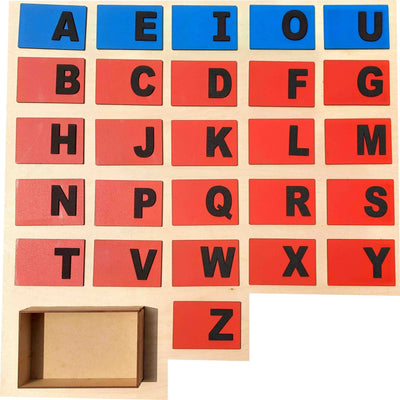
One of the most effective ways to teach hindi varnamala with pictures is through tangible Montessori materials like sandpaper letters. These textured letters allow children to trace the shape of each Vyanjan and Swar with their fingers, creating a strong muscular and visual memory. Pairing these letters with corresponding pictures of familiar objects (e.g., 'A' for Anar, 'Ka' for Kamal) solidifies the association between the sound, shape, and meaning.
Incorporating beautifully designed activity kits that feature Hindi Varnamala elements can further enhance this multisensory experience. These kits often include tracing boards, puzzles, and matching games that reinforce learning through interactive play, making the abstract concept of letters concrete and understandable for young children.
Educational Toys for Hindi Language Development
Educational toys for hindi language development are indispensable tools in a screen-free Montessori environment. Look for wooden puzzles featuring Hindi letters, flashcards with vivid illustrations, and alphabet blocks that encourage building and spelling. These toys transform language learning into a playful adventure, allowing children to manipulate, explore, and internalize Hindi sounds and shapes at their own pace.
SkilloToys offers a curated selection of Montessori learning materials specifically designed to support early language acquisition, including Hindi. These high-quality, child-safe resources are perfect for creating an engaging learning space where children can thrive away from screens, guided by their innate curiosity.
Overcoming Screen Addiction with Intentional Hindi Learning
Teaching Hindi Varnamala through a hands-on, screen-free approach provides a positive and constructive alternative to passive screen consumption. This intentional engagement can significantly help in curbing screen addiction, a growing concern for Indian parents. When children are deeply immersed in a stimulating activity like tracing a Hindi letter or identifying a picture, their need for digital entertainment naturally diminishes.
Family involvement, especially from grandparents, plays a crucial role here. Grandparents can share stories, sing traditional Hindi songs, and guide children through play with educational toys, weaving cultural context into language learning. This not only strengthens family bonds but also instills a sense of pride in their native language and heritage.
Tips for Consistent Screen-Free Hindi Practice
Consistency is key for effective language acquisition. Establish a daily routine, even if it's just 15-20 minutes, dedicated to Hindi learning activities. Keep materials fresh and rotate them to maintain interest. Celebrate small achievements, like recognizing a new letter or sounding out a simple word. Remember, the goal is to foster a positive relationship with learning, making Hindi an integral part of your child's joyful development.
Key Takeaways
- Multisensory, screen-free learning is optimal for Hindi Varnamala acquisition in young children.
- The Montessori approach fosters intrinsic motivation and a deep understanding of the Hindi alphabet.
- Creating a prepared environment with tangible, accessible materials significantly enhances learning outcomes.
- Early exposure to Hindi through hands-on activities boosts cognitive flexibility and cultural connection.
- Limiting screen time improves children's language development, attention span, and overall well-being.
- Educational toys and activity kits are crucial for making Hindi Varnamala learning engaging and effective.
Frequently Asked Questions about Screen-Free Hindi Varnamala Learning
When is the best age to start teaching Hindi Varnamala?
Children can begin engaging with Hindi Varnamala concepts as early as 18-24 months through sensory play and exposure to sounds. Formal introduction to letters, like with sandpaper letters, is typically effective from 3-4 years, when fine motor skills and letter recognition are developing.
How can I make learning Hindi Varnamala fun for my child?
Make learning Hindi Varnamala fun by incorporating multisensory activities, storytelling, and play-based learning. Use colorful charts, educational toys, and involve family members in interactive games, ensuring the process feels like discovery rather than rote memorization.
What are some effective screen-free Hindi activities?
Effective screen-free Hindi activities include tracing sandpaper letters, singing Hindi rhymes, reading Hindi storybooks aloud, identifying Varnamala on flashcards, and creating art projects based on Hindi letters. These hands-on methods engage multiple senses and enhance memory.
Are Montessori materials essential for teaching Hindi Varnamala?
While not strictly essential, Montessori materials are highly effective because they are designed for self-directed, tactile learning, making abstract concepts like letters tangible. They provide a structured yet flexible framework that supports a child's natural developmental stages for language acquisition.
How does screen time affect Hindi language development?
Excessive screen time negatively impacts Hindi language development by reducing opportunities for active verbal interaction and real-world exploration. Studies suggest it can lead to delayed speech, reduced vocabulary, and difficulties in attention and social communication crucial for mastering a language.
Can grandparents help with screen-free Hindi learning?
Absolutely, grandparents are invaluable assets in screen-free Hindi learning, especially in Indian joint families. Their storytelling, traditional songs, and daily conversations in Hindi provide authentic exposure and a strong emotional connection, reinforcing cultural heritage alongside language skills.