Montessori Board Games for Sensory Development in Kids
Choosing the right Montessori board games for sensory development is a definitive step towards fostering holistic growth in kids aged 0-5 years. Research shows that early sensory experiences are crucial for brain architecture, laying the groundwork for all future learning. For Indian parents, navigating the myriad of educational options can be challenging, but SkilloToys.com provides curated, science-backed solutions to support your child's journey.
What is Montessori Sensory Play?
Montessori sensory play involves purposeful activities designed to refine a child's five senses: sight, sound, touch, taste, and smell. This matters because it helps children categorise and understand their world, forming a basis for intellectual development. Indian parents can integrate these activities to enhance their child's natural curiosity and cognitive skills through engaging, hands-on experiences.
Why Sensory Board Games are Crucial for Kids 0-5 Years
Sensory board games are more than just play; they are vital learning tools for children in their foundational years. Studies indicate that approximately 80% of a child's brain development occurs by age three, with sensory input driving the formation of crucial neural pathways. For families across India, from bustling Bengaluru apartments to serene village homes, these games offer a potent alternative to screen time, fostering essential skills while encouraging family bonding.
Child development experts agree that engaging multiple senses simultaneously boosts cognitive flexibility and problem-solving abilities. In a nation where early education is increasingly prioritised, providing children with high-quality sensory experiences from a young age is paramount. These purposeful activities align with the spirit of initiatives promoting thoughtful play, as seen in projects like 'The Playscape' in Hyderabad, which champions engaging environments for young learners.
Top Montessori Board Games for Tactile & Visual Sensory Development
Montessori education, pioneered by Maria Montessori, emphasises concrete learning through carefully designed materials. When selecting the best Montessori games for sensory play, focus on those that engage touch and sight:
For Infants (0-18 Months): Early Tactile & Visual Exploration
At this stage, 'board games' often mean sensory boards or simple matching activities. Look for items that offer varied textures like smooth wood, rough sandpaper, or soft fabric patches. Large, high-contrast visual cards or simple shape puzzles encourage grasping, manipulation, and visual discrimination. These foundational experiences prepare children for more complex tasks by refining their ability to discern differences and similarities.
Consider simple stacking rings or nested boxes that introduce concepts of size and order. These tactile experiences are critical for developing fine motor skills and hand-eye coordination, essential prerequisites for later writing and practical life skills. SkilloToys offers a range of activityKits designed to introduce these basic sensory concepts in an engaging way.
For Toddlers (18 Months - 3 Years): Shape, Colour, and Texture Matching
As toddlers grow, their ability to discriminate and categorise refines. Educational board games for toddlers at this age include classic Montessori materials adapted into 'game' formats. Shape sorters, simple knobbed puzzles, and colour matching games become invaluable.
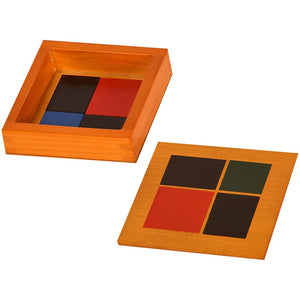
Games requiring them to match geometric shapes or identify primary colours strengthen visual perception and logical thinking. Textured memory games, where children feel and match corresponding surfaces, elevate tactile discrimination. These activities not only boost sensory skills but also enhance concentration, a critical skill for future academic success in Indian schools.
For Preschoolers (3-5 Years): Advanced Visual & Tactile Sequencing
Preschoolers are ready for more complex challenges. Sensory board games for preschoolers can involve sequencing activities, like ordering objects by height or width (similar to the Pink Tower principle), or multi-step colour and shape sorting tasks. Memory games that require visual recall and matching, or puzzles with increasing complexity, are ideal.
Introducing games that involve tracing sandpaper letters or numbers, while not traditional 'board games,' applies the Montessori principle of tactile learning to prepare for literacy. These materials help children internalise abstract concepts through concrete sensory experiences. Encouraging such focused play also helps children develop patience and self-correction, crucial for independent learning.
Boosting Auditory & Other Sensory Skills with Montessori Games
Beyond visual and tactile, Montessori principles extend to refining other senses, often integrated into a broader sensory play experience.
Auditory Discrimination Games
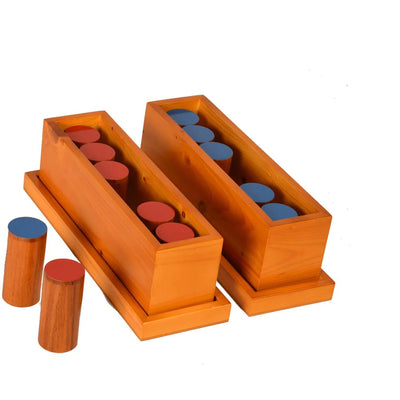
Auditory sensory development is vital for language acquisition and listening skills. Sound boxes or cylinders, where children match pairs of containers producing identical sounds, are excellent Montessori-inspired 'games.' These help children distinguish subtle differences in pitch, volume, and timbre. Such focused listening activities are incredibly beneficial in a diverse linguistic environment like India, enhancing a child's ability to differentiate phonemes and prepare for multiple languages.
Exploring Other Senses (Olfactory & Gustatory)
While less common in traditional 'board games,' Montessori offers specific materials like scent bottles (matching different smells) and tasting activities (matching different tastes) to refine these senses. These can be integrated into broader sensory play sessions, offering a comprehensive sensory education. Always ensure safety and age-appropriateness when introducing taste and smell activities.
Choosing the Right Montessori Board Game for Your Child
When selecting Montessori board games for your little one, consider these practical tips:
- Age Appropriateness: Always match the game to your child's developmental stage, not just their chronological age. A game too easy will bore them, one too hard will frustrate them.
- Quality & Safety: Opt for durable, non-toxic materials, especially important for the 0-5 age group who explore with their mouths. This aligns with the 'safe play' environment promoted by initiatives like 'Umang Vatika' for children's well-being.
- Purposeful Design: Montessori materials are designed with a 'control of error,' allowing the child to self-correct and learn independently without constant adult intervention. Look for this feature.
- Child's Interest: Observe your child's fascinations. If they love textures, lean into tactile games. If they are drawn to colours, find vibrant visual matching activities.
- Open-Ended Potential: While structured, the best Montessori games can often be used in multiple ways, fostering creativity and sustained engagement.
For a comprehensive selection of these enriching materials, explore SkilloToys' main collection of Montessori Method Learning Materials & Toys. These resources are designed to support your child's natural drive for learning and sensory exploration, right here in India.
- Montessori board games specifically target the refinement of a child's five senses, crucial for early learning.
- Sensory play in the 0-5 age range directly contributes to cognitive development, problem-solving, and fine motor skills.
- Authoritative research indicates sensory experiences build critical neural connections, with 80% of brain development occurring by age three.
- Choosing age-appropriate, durable, and non-toxic Montessori materials is vital for safe and effective sensory exploration.
- Integrating Montessori sensory games into daily routines offers a screen-free alternative for purposeful family engagement.
- Montessori games promote self-correction and independent learning, aligning with a child's natural curiosity and developmental pace.
What age is appropriate for Montessori board games?
Montessori board games are appropriate for children from birth, starting with simple sensory exploration for infants and progressing to structured games for toddlers and preschoolers. The key is selecting materials that match the child's developmental stage and specific sensory interests.
How do Montessori board games help with sensory development?
Montessori board games are meticulously designed to isolate and refine individual senses, helping children distinguish between textures, colours, sounds, and shapes. This focused sensory input strengthens neural pathways, improves discrimination skills, and enhances concentration, laying a strong foundation for abstract learning.
Are board games effective for toddlers' cognitive growth?
Yes, board games are highly effective for toddlers' cognitive growth, fostering critical thinking, problem-solving skills, and memory recall. Engaging with games like shape sorters or simple matching tasks encourages pattern recognition and logical reasoning in an enjoyable, hands-on manner.
What are some examples of sensory board games for preschoolers?
For preschoolers, excellent sensory board games include colour sorting activities, textured matching games, sound boxes for auditory discrimination, and simple sequencing puzzles. These materials challenge their senses while developing fine motor skills and encouraging independent thought.
How can I introduce Montessori board games in a joint family setting?
Introduce Montessori board games by creating a dedicated, clutter-free 'work area' where the child can focus, even amidst a bustling joint family. Encourage grandparents and other family members to observe and gently guide, emphasizing the child's independent exploration and the joy of purposeful play over competition.