Toddlers Learn Maths Through Physical Objects, Not Just Numbers
Imagine your little one, eyes wide with curiosity, trying to count the colourful bangles on Dadi's wrist during Diwali. Or perhaps they're helping you sort rajma from chana for dinner. While we often think of 'maths' as abstract numbers and symbols, for a toddler, the world of mathematics unfolds through these very real, physical experiences. Did you know toddlers learn maths through physical objects, not just rote counting? This hands-on exploration is exactly how their developing brains grasp fundamental mathematical concepts long before they ever see a numeral.
Understanding early mathematics for toddlers isn't about memorising numbers from 1 to 10; it's about building a foundational understanding of quantity, comparison, patterns, and spatial relationships. Maria Montessori observed that young children possess an absorbent mind, naturally taking in information from their environment. They develop a "mathematical mind" by interacting with concrete materials, allowing them to internalise concepts like "more," "less," "same," and "different" through touch and sight. This works because their brains are wired for concrete learning first, before moving to abstract thought. Parents can facilitate this by providing rich, hands-on experiences at home.
Why Concrete Learning Matters for Toddlers
A toddler's brain is a busy construction site, constantly building connections. Abstract symbols, like the numeral '3', hold little meaning without a tangible connection. When a child picks up three blocks, stacks them, or puts them in a basket, they are experiencing the quantity of "three" with their senses. This sensory input forms the bedrock of their mathematical understanding. This approach is crucial for healthy child development in India, fostering a deep, intuitive grasp of concepts rather than surface-level memorisation.
Everyday Maths in Your Indian Home
Our Indian homes are bustling hubs of activity, naturally rich with opportunities for early maths. Whether it's counting how many rotis are needed for lunch, sorting colourful dupattas in the wardrobe, or helping grandparents count the marigolds for a puja, these daily routines are prime Montessori learning activities. Even in a small apartment, you can turn sorting vegetables for dinner or arranging shoes at the door into a lesson in classification and order. Such hands-on engagement, often facilitated by a joint family environment, is invaluable for building a strong mathematical foundation.
Montessori Materials: Bridging Concrete to Abstract
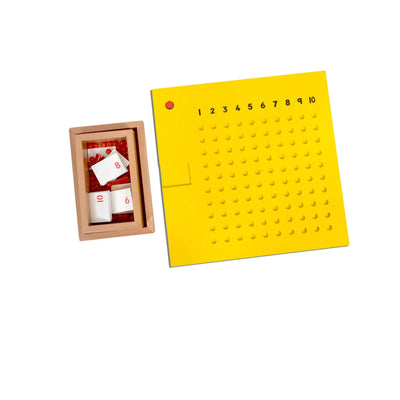
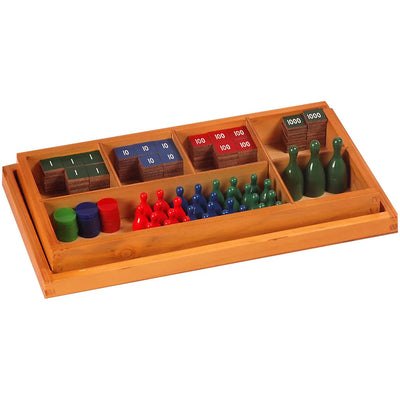
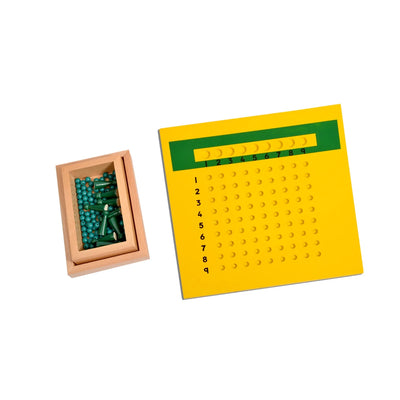
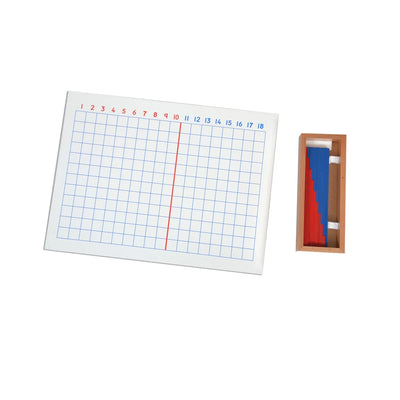
Maria Montessori designed specific materials to guide children from concrete understanding to abstract concepts, perfectly aligning with how toddlers learn maths through physical objects. Take the iconic Pink Tower, for instance. By stacking cubes of varying sizes, children instinctively grasp concepts of gradation, sequence, and spatial reasoning, building early visual discrimination skills. The Red Rods introduce linear measurement and the concept of relative length, helping children compare 'shorter' and 'longer'. Then there are the Number Rods, which visually connect a quantity of units (like five segments) with its corresponding numeral, bridging the concrete quantity to its abstract symbol.
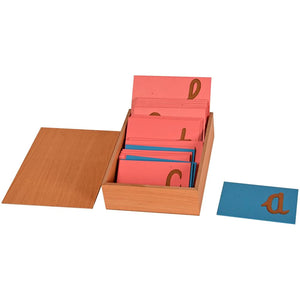
The Spindle Box, a favourite among educational toys for toddlers, helps children understand the concept of zero and associate quantities (spindles) with written numerals through one-to-one correspondence. Even for slightly older toddlers, the Sandpaper Numbers offer a tactile way to learn number shapes, preparing them for writing. These materials are not just toys; they are carefully designed tools that isolate mathematical concepts, allowing children to discover principles at their own pace and correct their own errors, fostering independence in learning.
Simple Ways to Encourage Early Maths at Home
Parents play a vital role in nurturing their child's mathematical mind. Start by incorporating counting into everyday tasks: "Let's put two spoons on the table," or "How many steps to the balcony?" Use descriptive language that highlights quantity and comparison: "This puri is bigger than that one," or "We have less milk today."
Provide ample opportunities for sorting and matching with common household items like buttons, socks, or small fruits. Ask open-ended questions like, "Which pile has more?" or "Can you find two things that are exactly the same?" Engage them in simple games involving patterns – clapping sequences, arranging blocks in a repeating colour order, or finding symmetries in nature. You can even involve them in simple measurement tasks, like pouring water between different sized vessels or using a measuring cup to help in the kitchen. The key is to make learning joyful and integrated into their daily lives, letting them explore and discover mathematical truths through their own hands and observations.
Observing your toddler engage with the world, touching, exploring, and organising, reveals their innate drive to understand. By providing rich, physical experiences, you're not just playing; you're laying a robust foundation for a lifelong love of learning and mathematics. Explore SkilloToys.com for a range of thoughtfully designed Montessori materials that support this natural journey of discovery for your child.