
Sandpaper Letters
Parent's buying guide
How to choose sandpaper letters for your child:
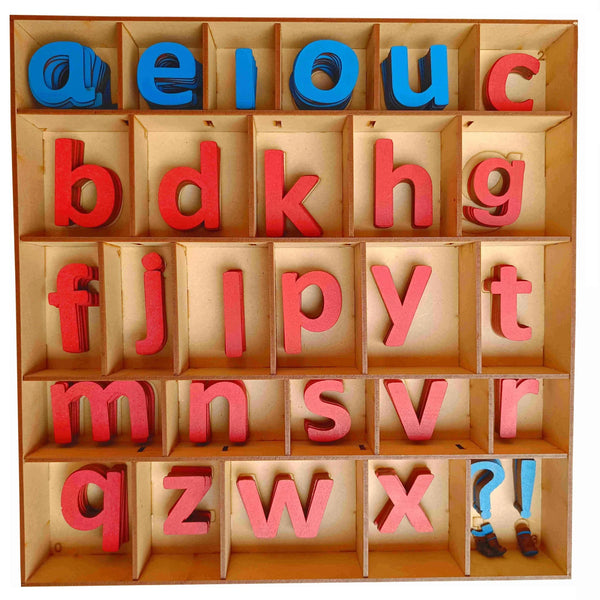
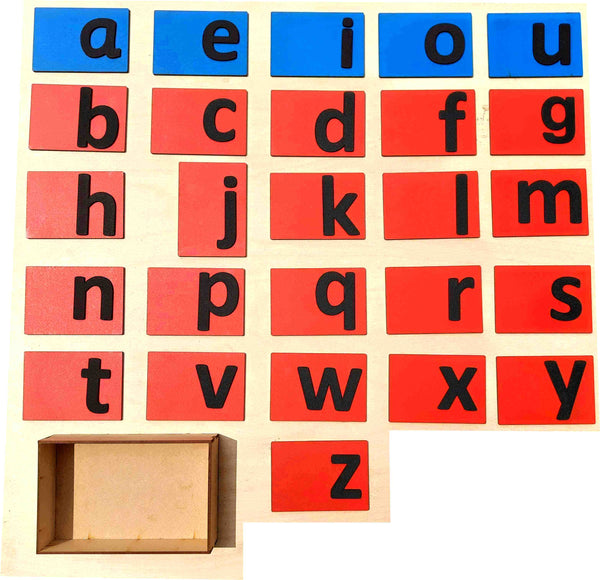
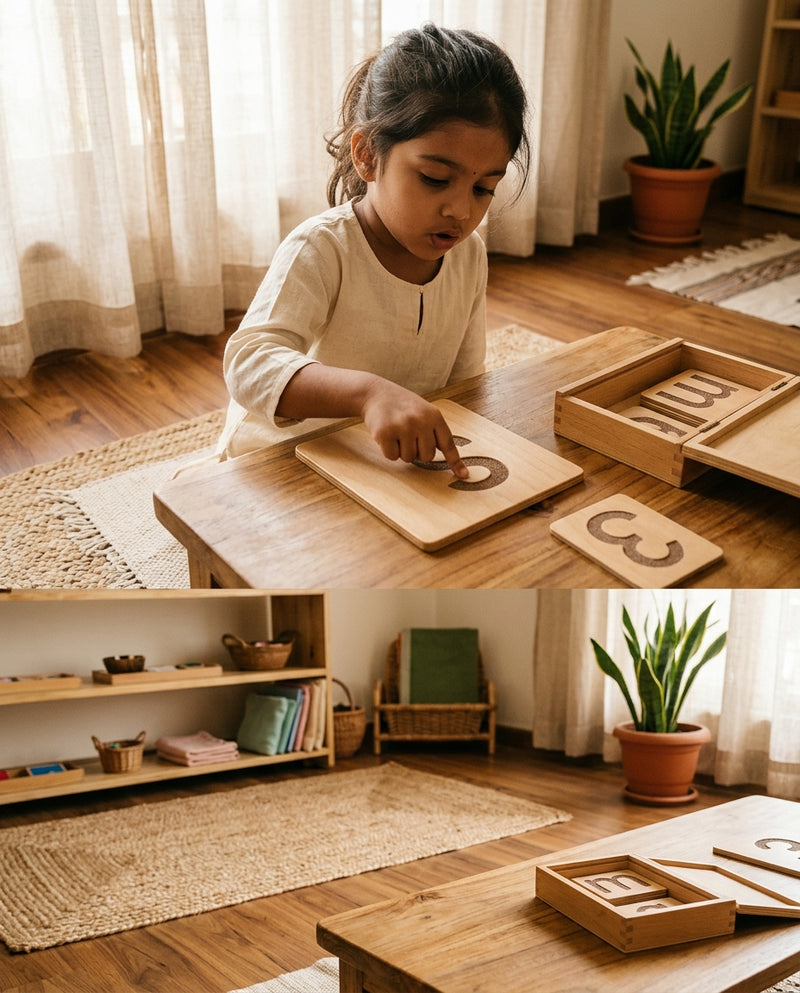
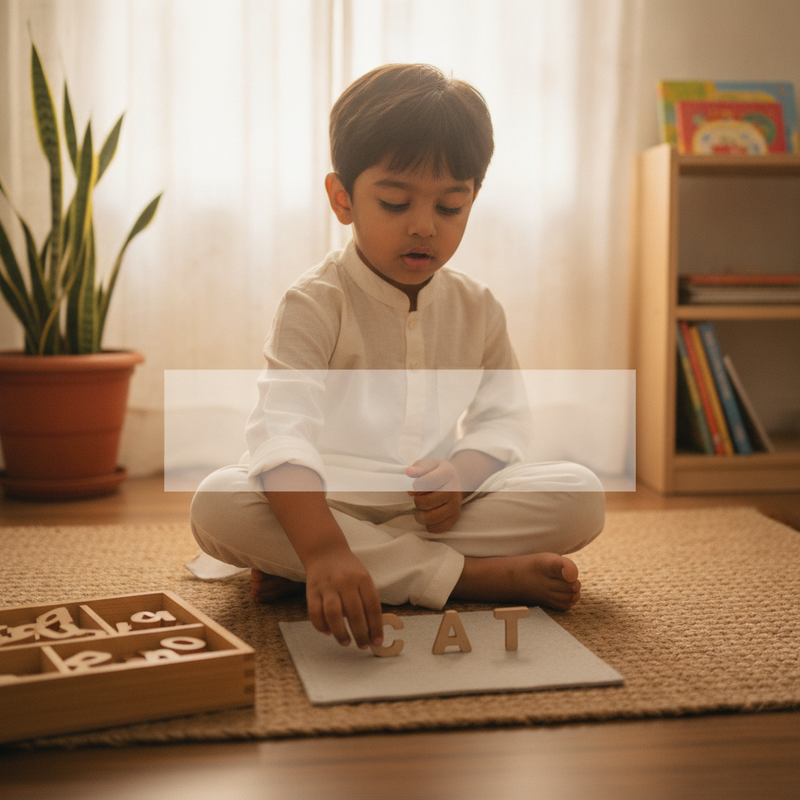
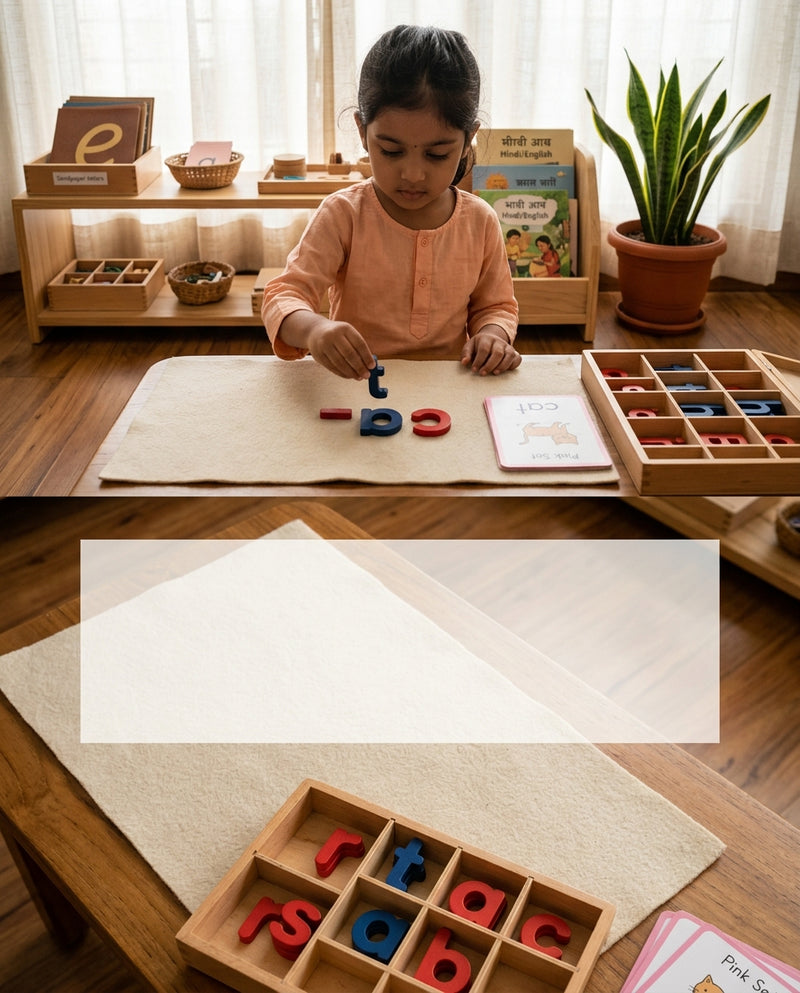
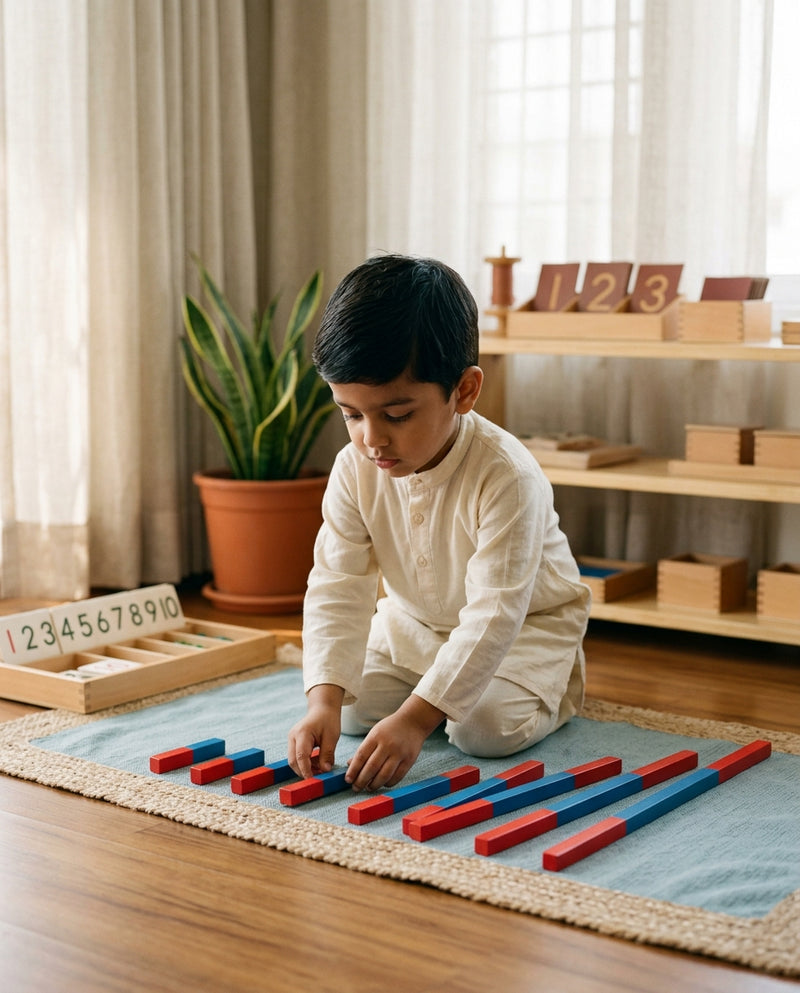
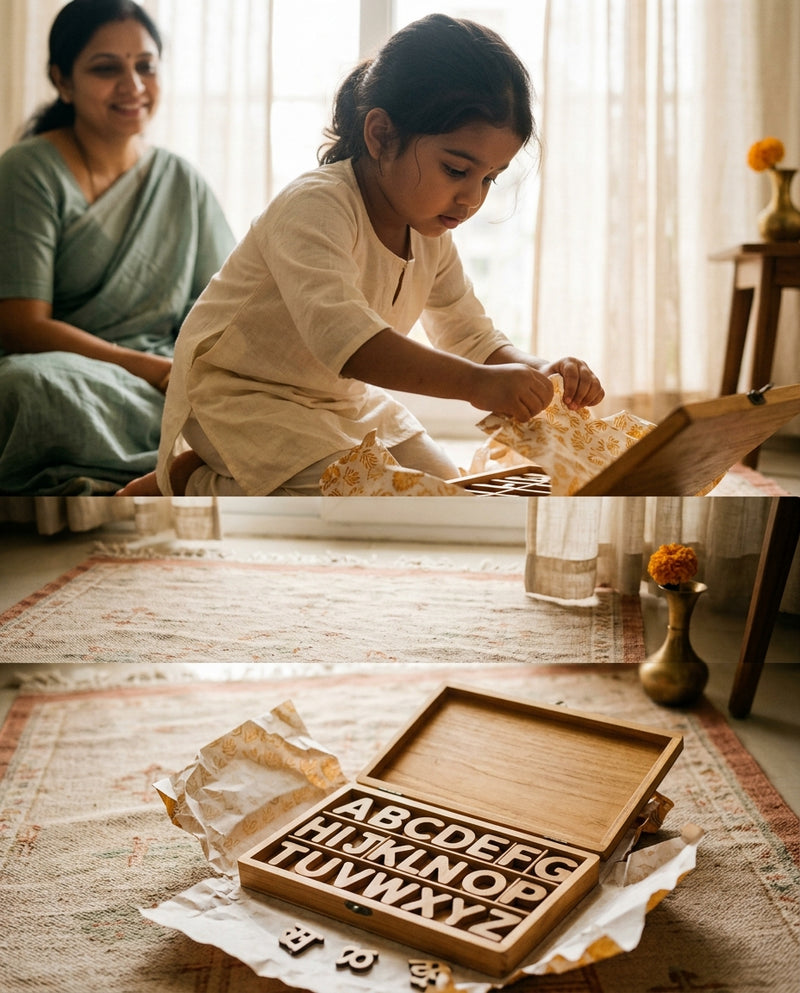
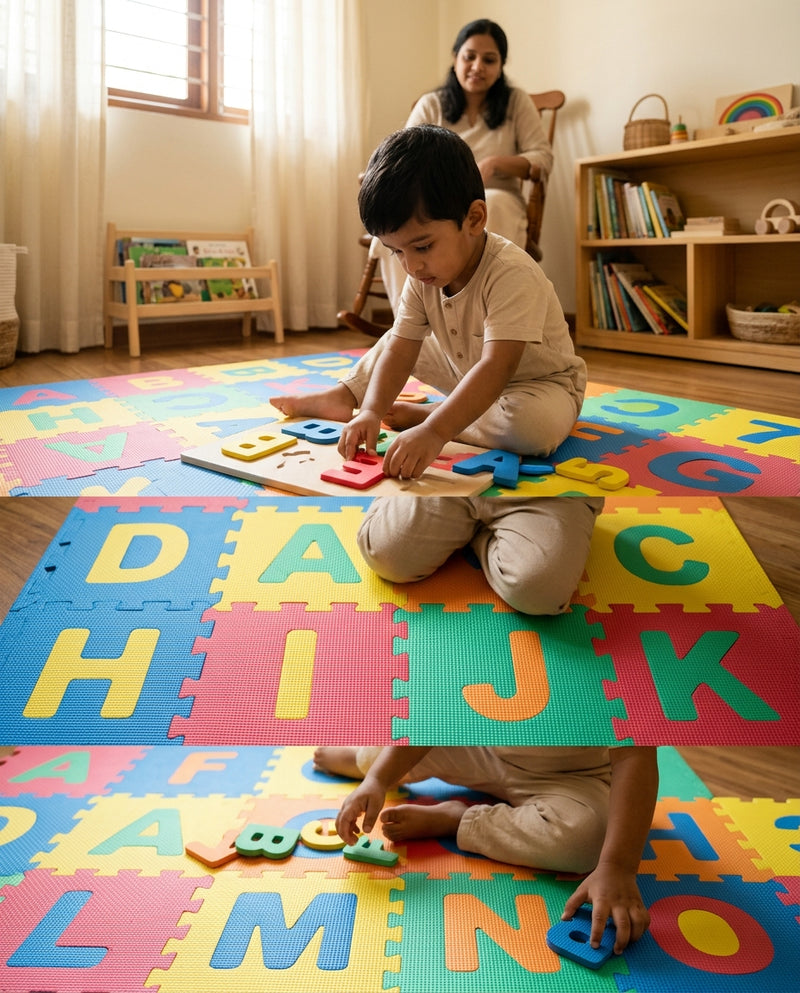
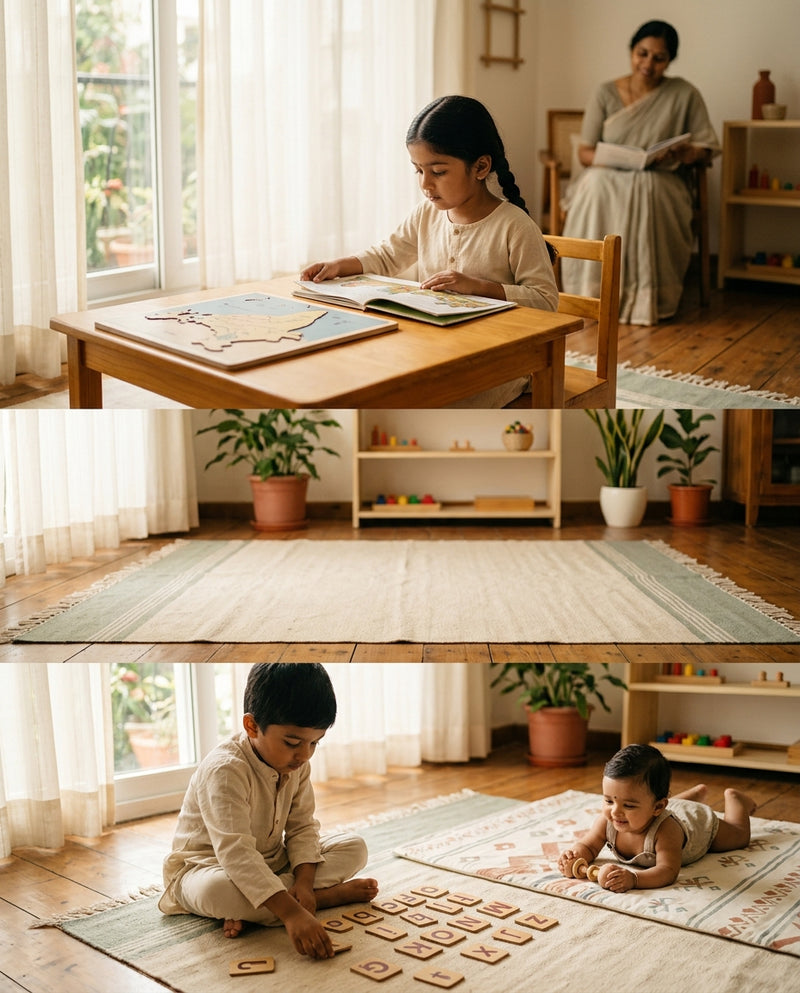
For ages 3 to 4: start with Lower Case English Sandpaper Alphabets with the wooden storage box. Lower case is used in 80 percent of text, easier shapes for first writing. Pair with Sandpaper Numbers around 3.5 to introduce digit shapes.
For ages 4 to 5: add Upper Case English Alphabets for capitals and proper nouns. Begin mother tongue introduction - Hindi, Tamil, Telugu or Kannada sets depending on home language. The dual-language window is widest from 4 to 5.
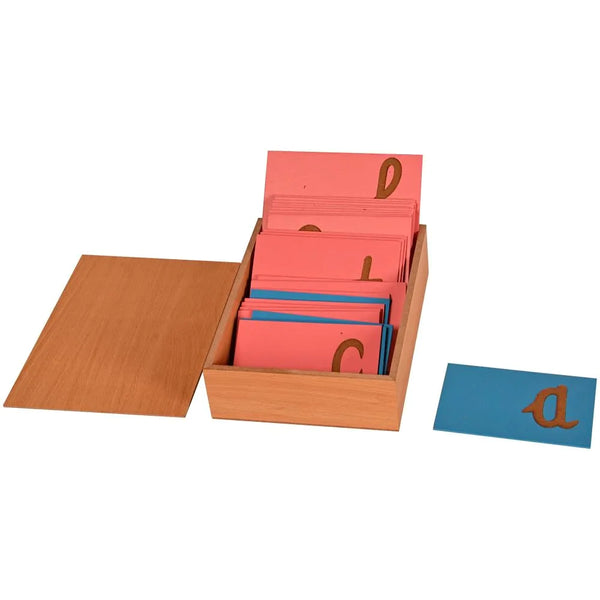
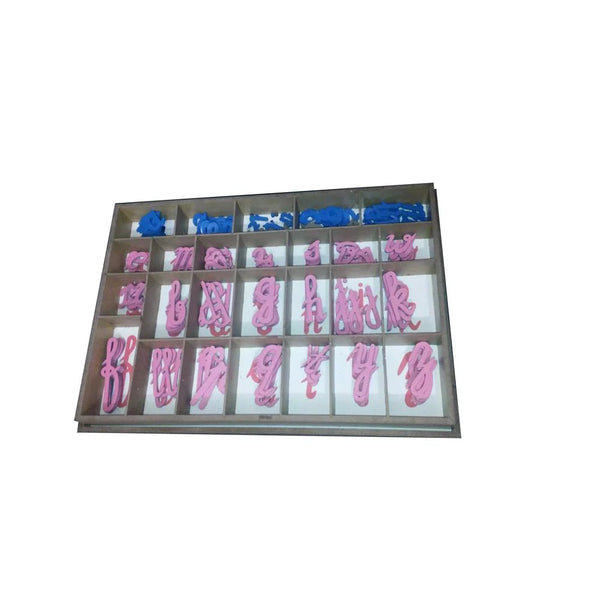
For ages 4 to 6 with cursive curriculum: Running Cursive Sandpaper Alphabets and Cursive Letter Tracing Sandpaper. Most ICSE schools still teach cursive in class 1. Two months of pre-handwriting cursive work and the school year becomes effortless.
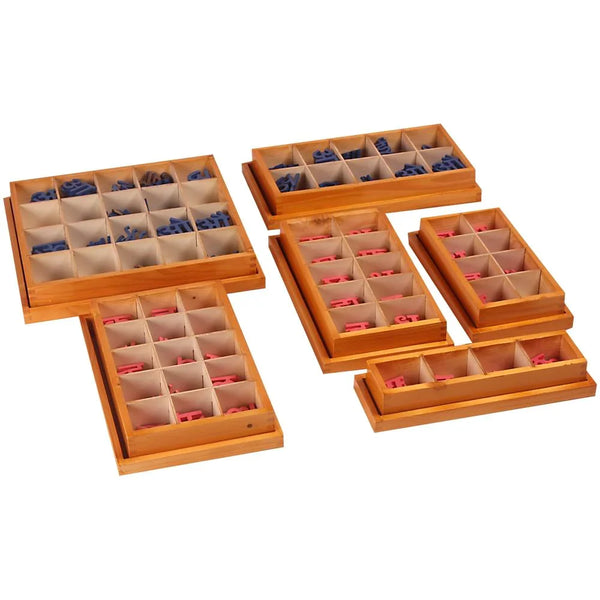
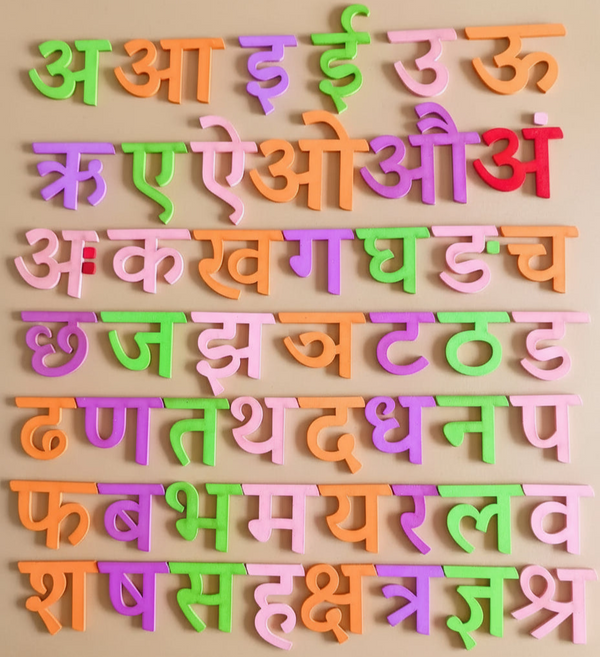
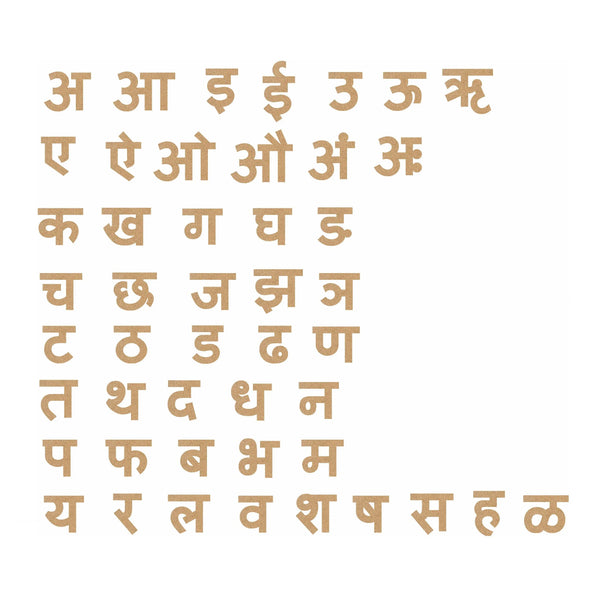
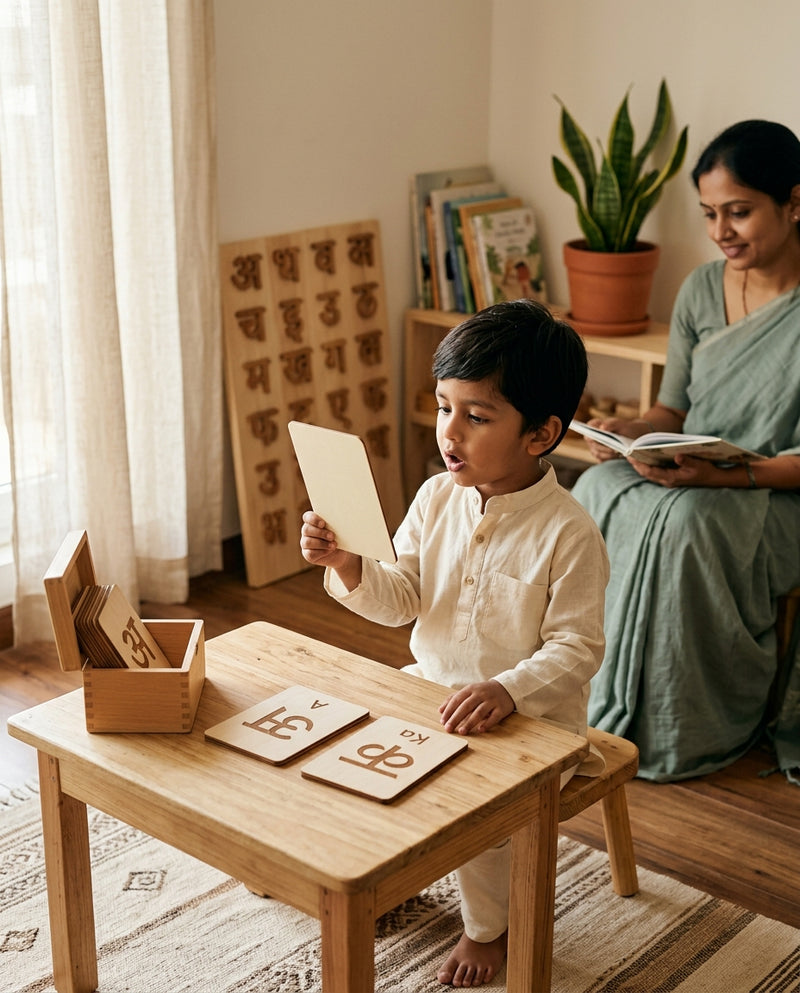
For Hindi-language households or CBSE Hindi prep: Hindi Sandpaper Alphabets box plus Hindi Letter Tracing set. The varnamala becomes accessible the same tactile way the English alphabet does, before any pressure to write.
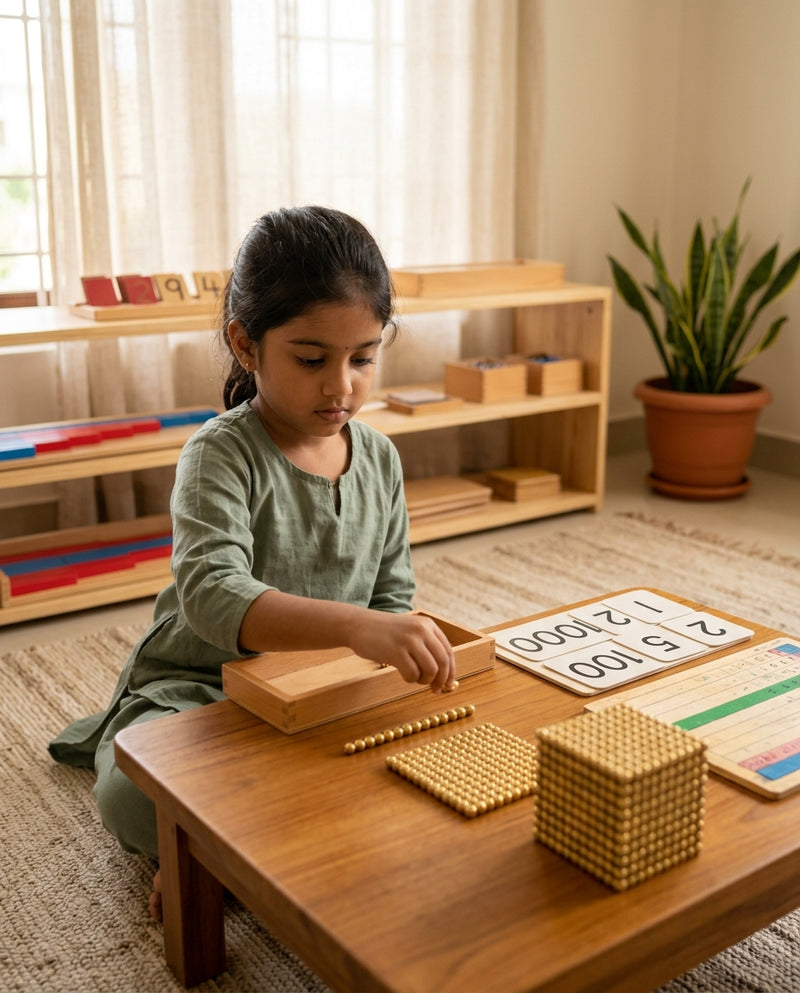
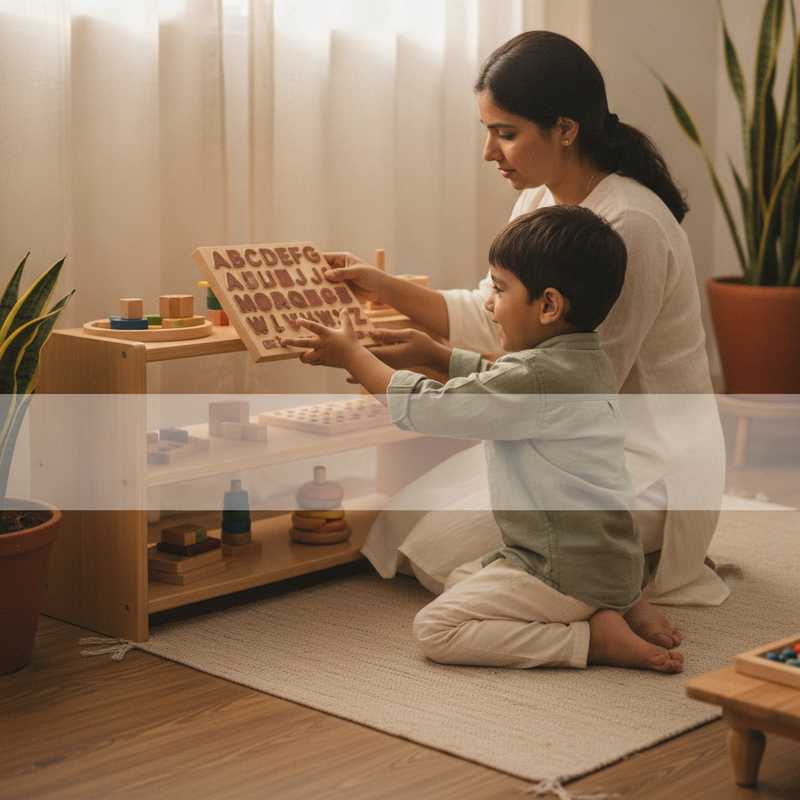
How to use: the Montessori 3-period lesson. Period 1: trace the letter with two fingers in correct writing direction, say its sound (not letter name). Period 2: place two letters in front, ask child to point to one. Period 3: show one letter, ask what sound it makes. 5 to 10 minutes per session, 3 to 4 days a week, two letters at a time. Children typically master the full English alphabet in 6 to 8 weeks.
Skills this shelf builds
What sandpaper letters actually build:
Deep letter-sound association. Tracing rough sandpaper while saying the sound binds shape, direction and phoneme together in the brain. Children who use sandpaper letters consistently retain letter sounds far longer than those taught via flashcards or screens.
Pre-writing muscle memory. The finger traces the exact stroke path a pen will later follow. By the time the child picks up a pencil, the writing motion is already learned. Cleaner handwriting from class 1, less correction needed later.
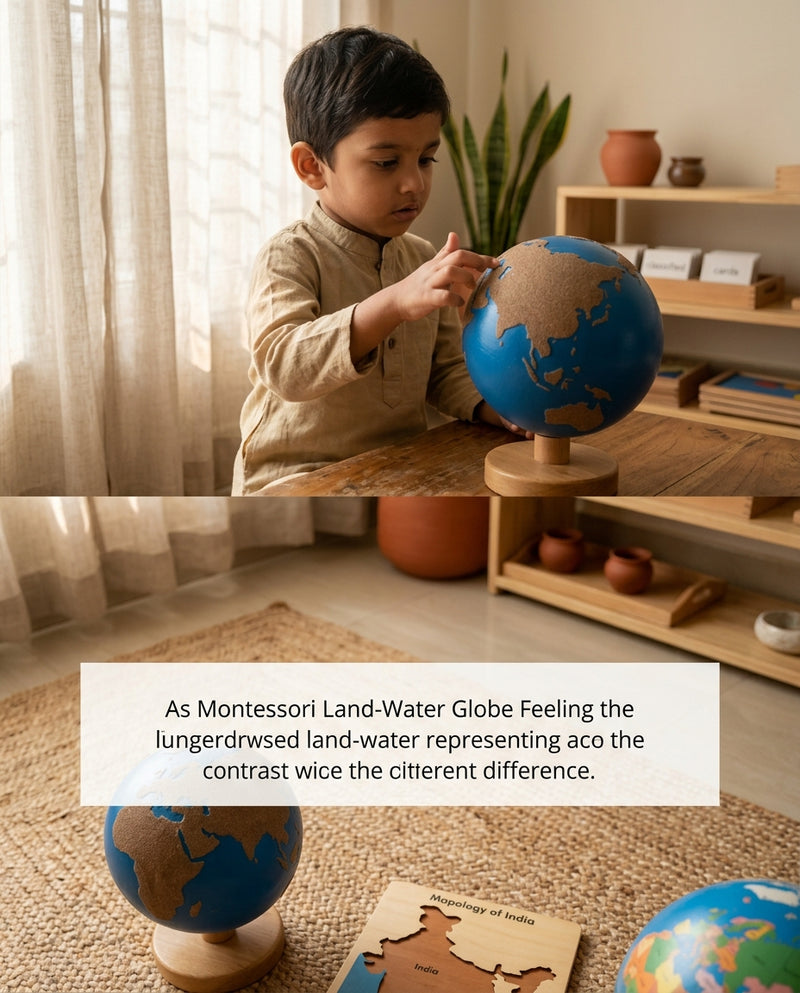
Mother tongue literacy. Hindi, Tamil, Telugu, Kannada and Arabic sandpaper sets let Indian children build first-language literacy in the same tactile method. Research is unambiguous that mother-tongue-first reading creates stronger readers across all languages later.
Reading readiness without pressure. The Montessori 3-period lesson is a gentle, child-led method that builds letter mastery without rote drilling. The child arrives at school already curious about words and confident with letters, ready to read.