
Buying guide
Puzzles
Parent's buying guide
How to choose puzzles for Indian children at every stage.
Match piece count to age, conservatively
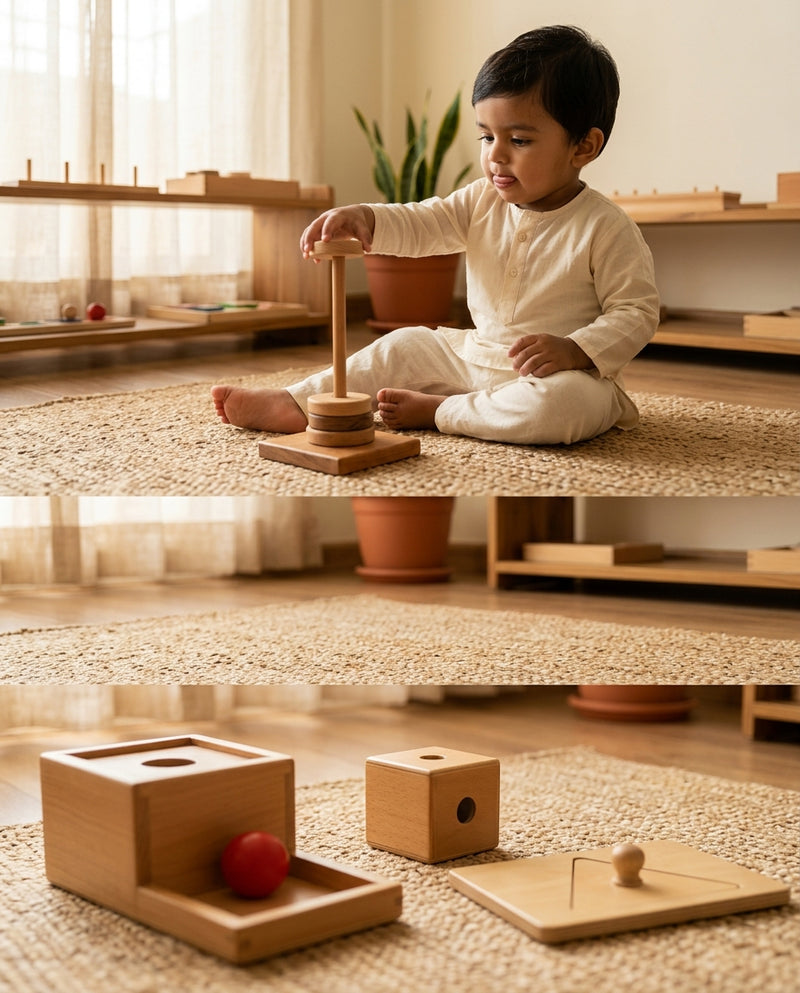
- 15 to 24 months: single-piece chunky knob puzzles only.
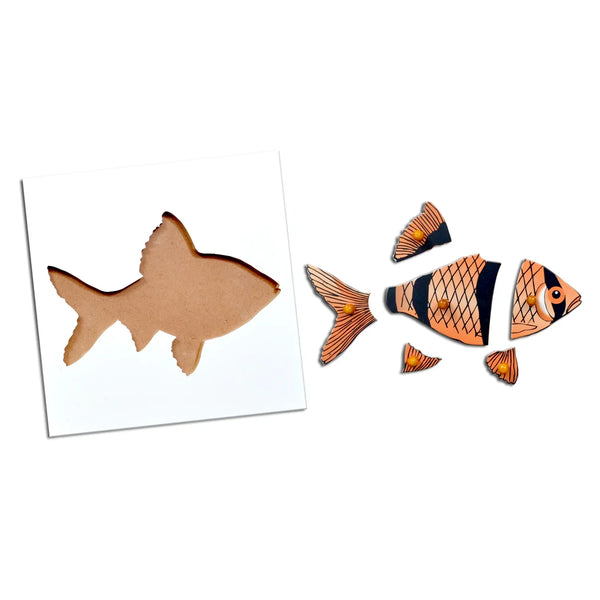
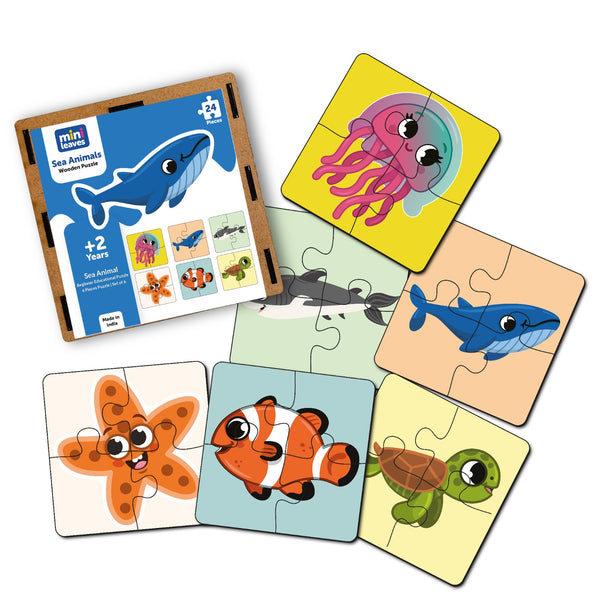
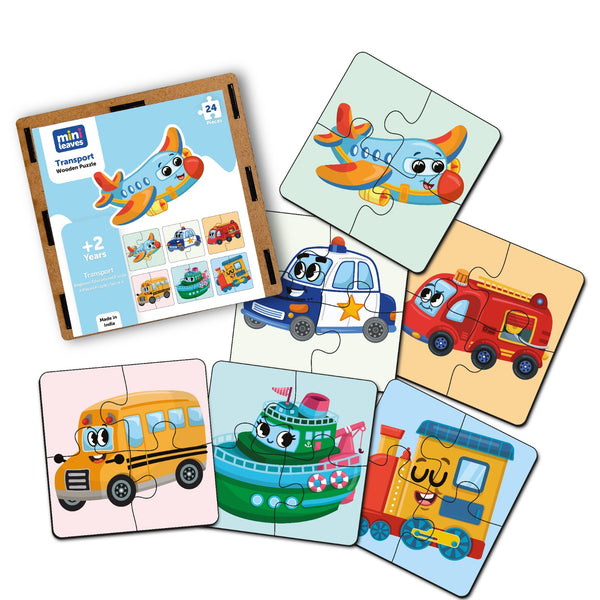
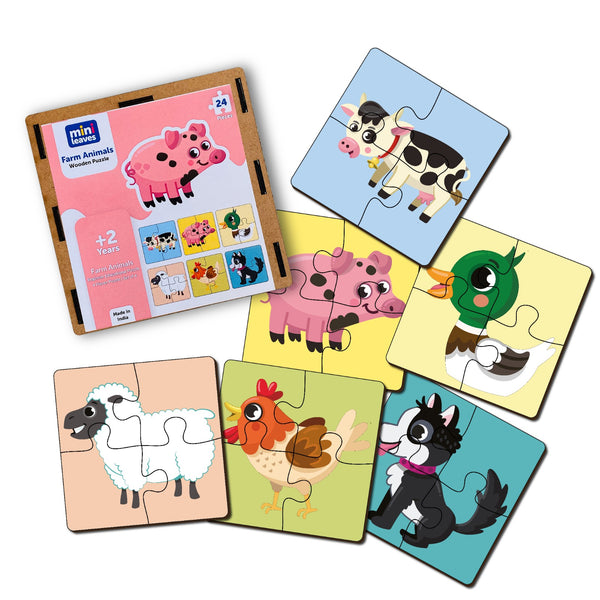
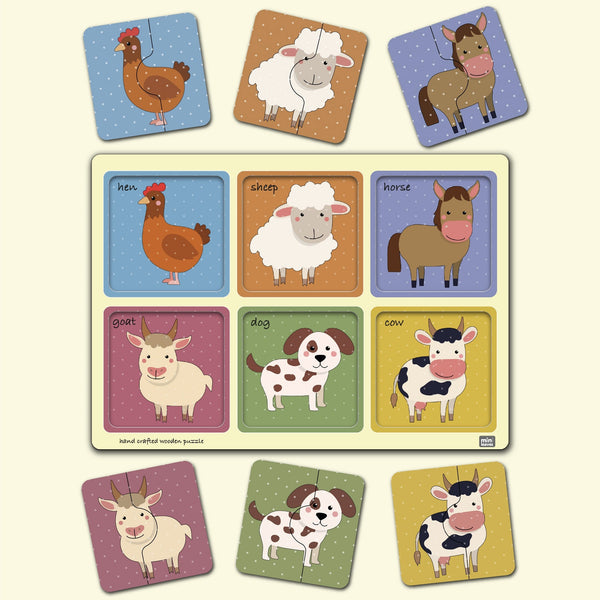
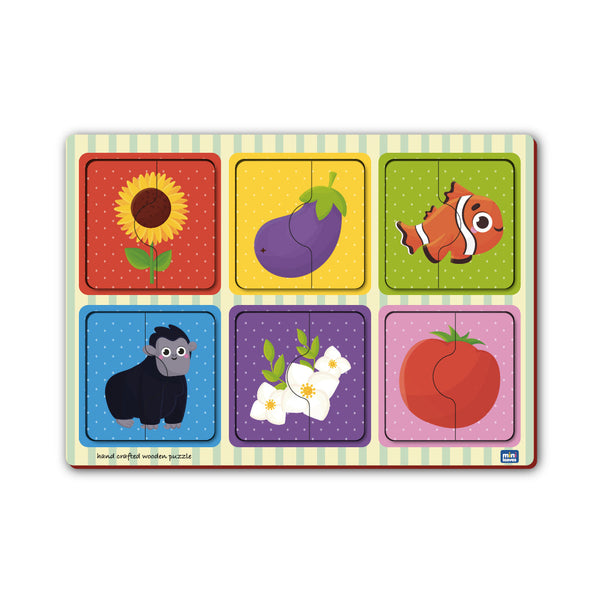
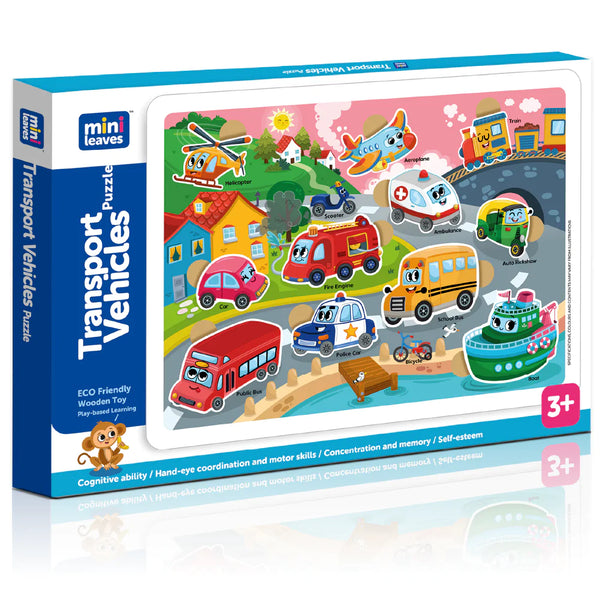
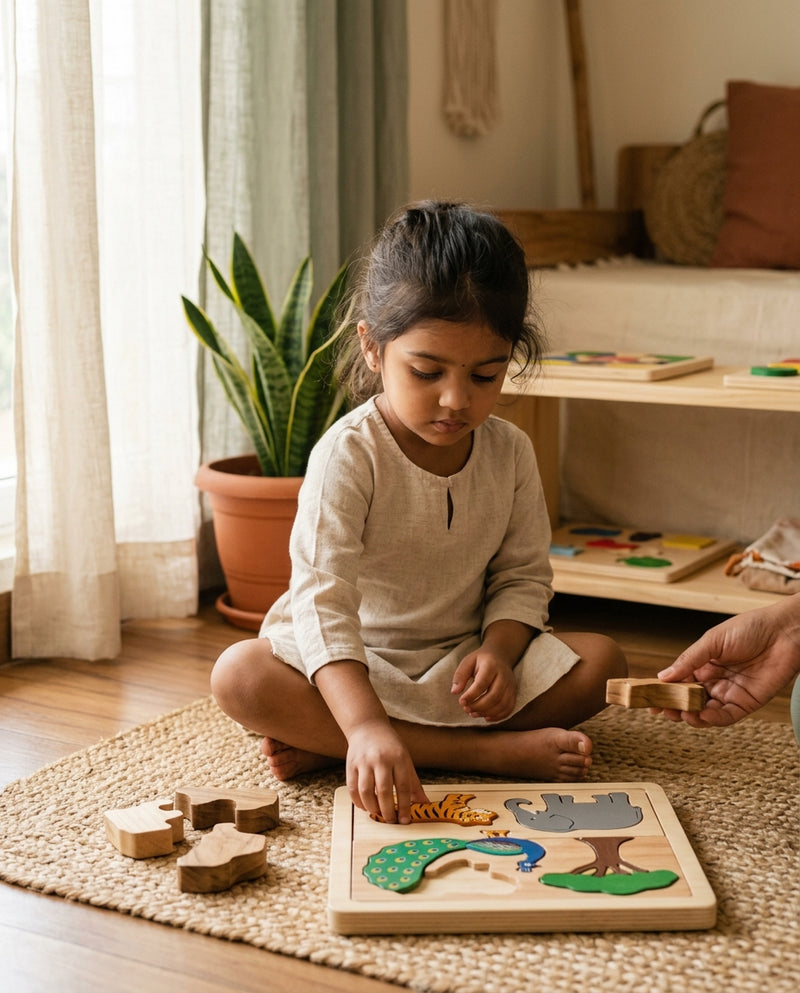
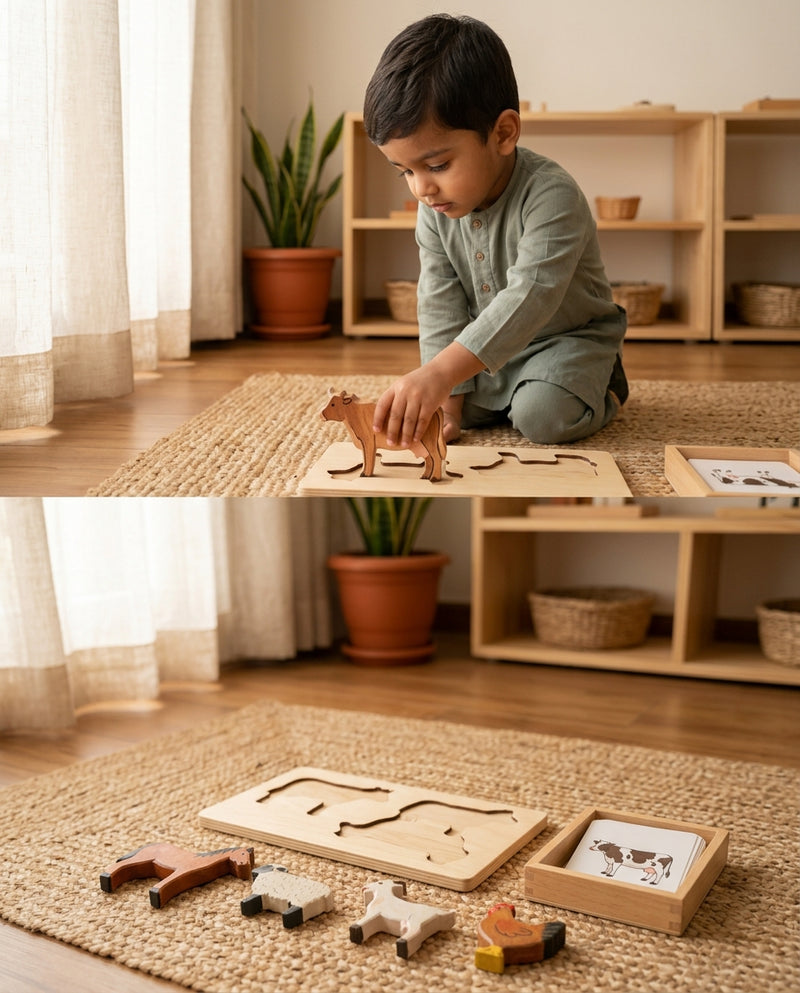
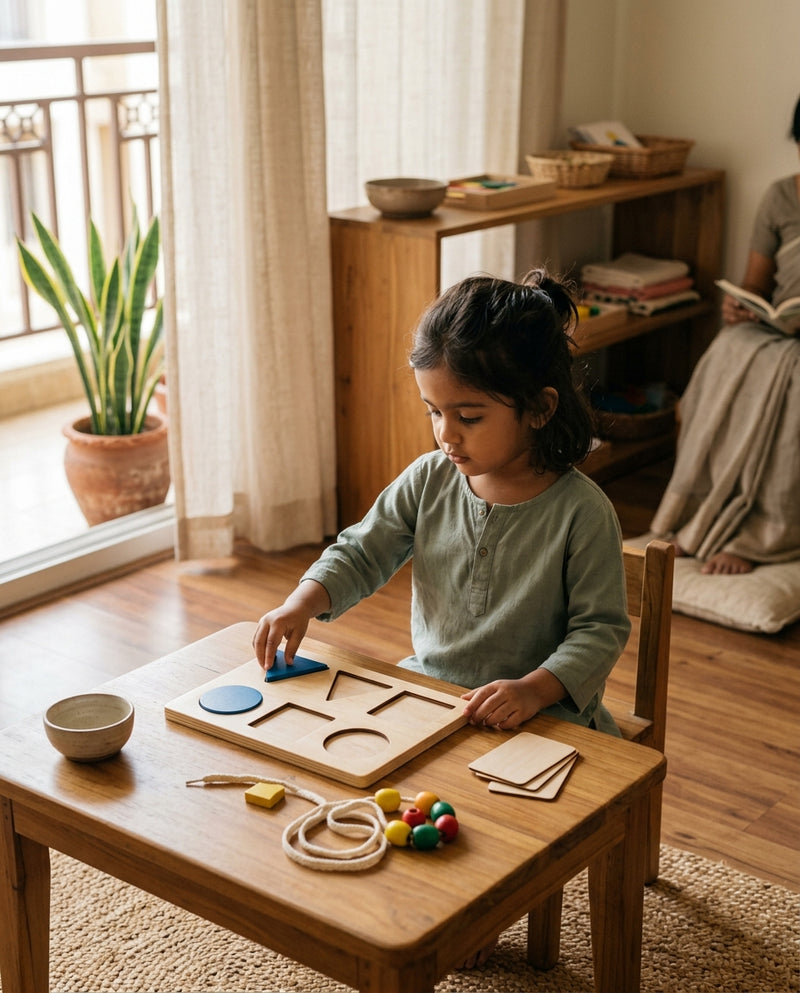
- 2 to 3 years: 4 to 6 piece tray puzzles, one image.
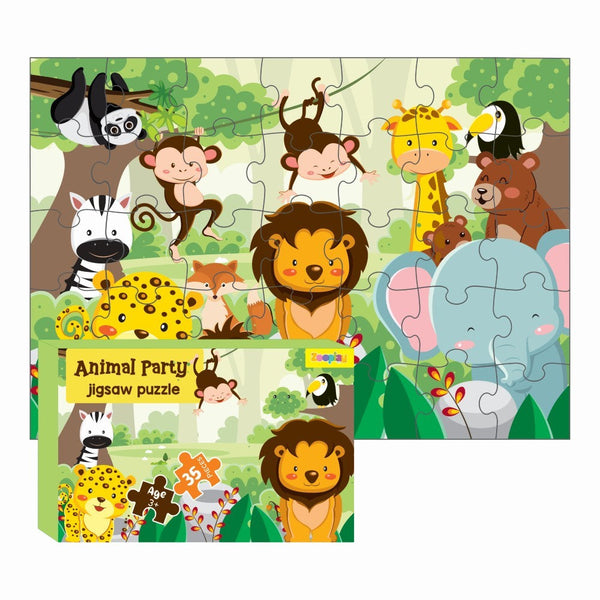
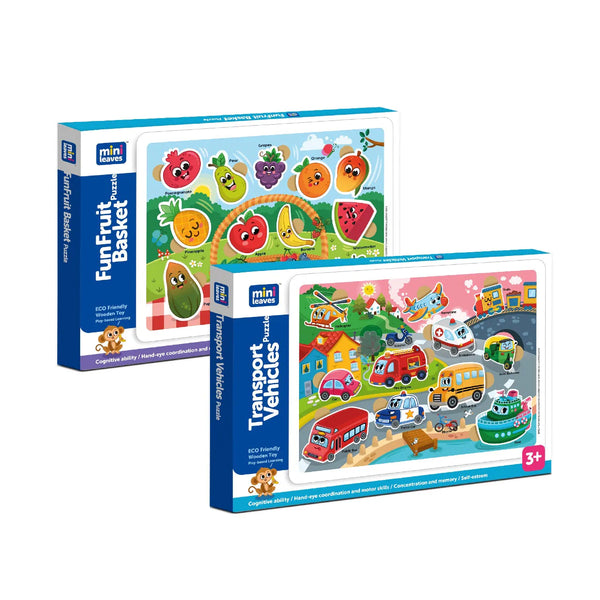
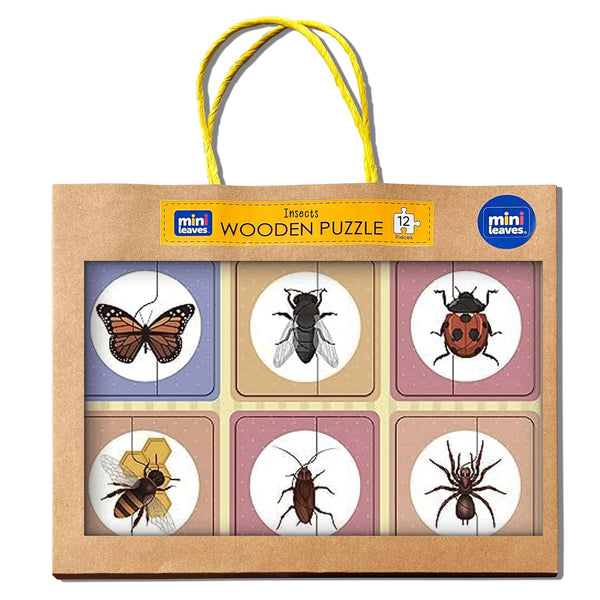
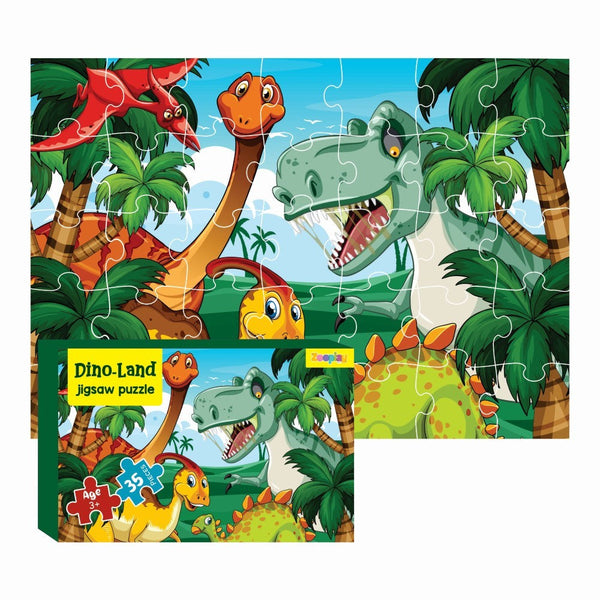
- 3 to 4 years: 12 to 20 piece sets.
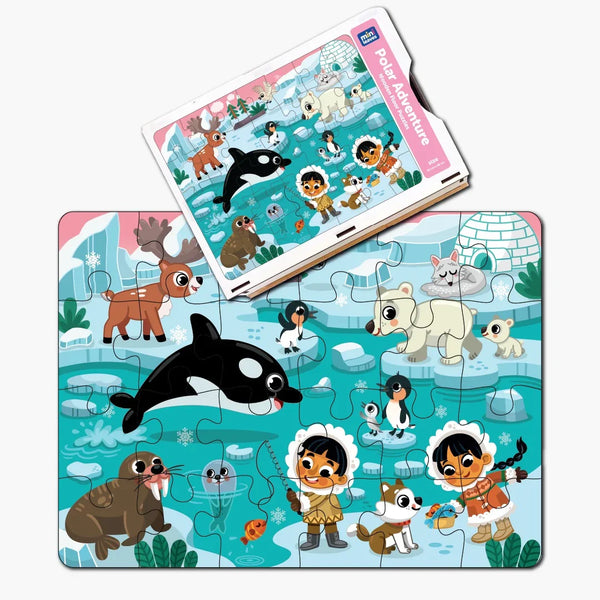
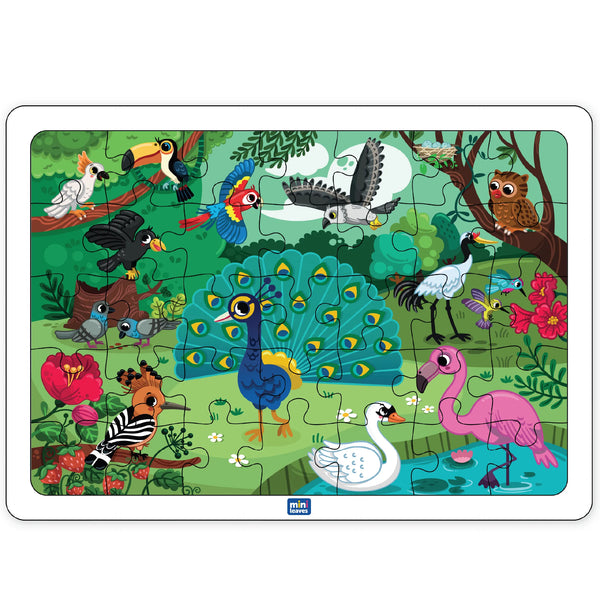
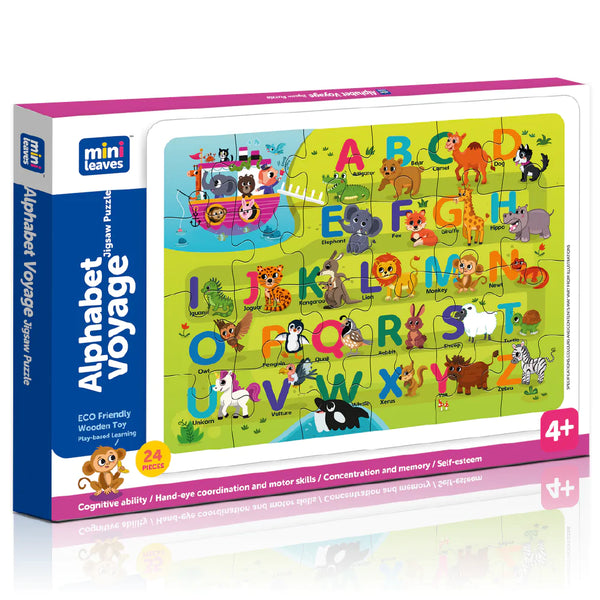
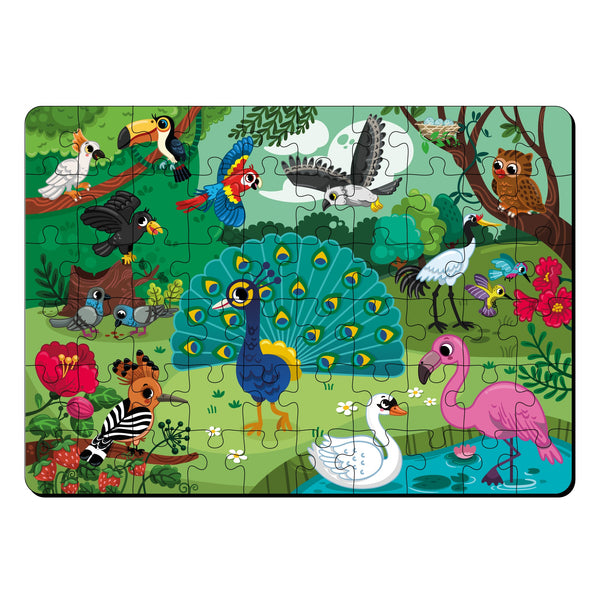
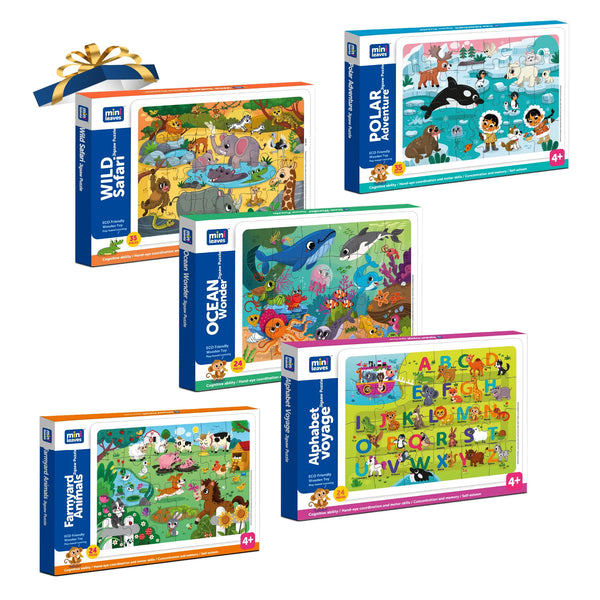
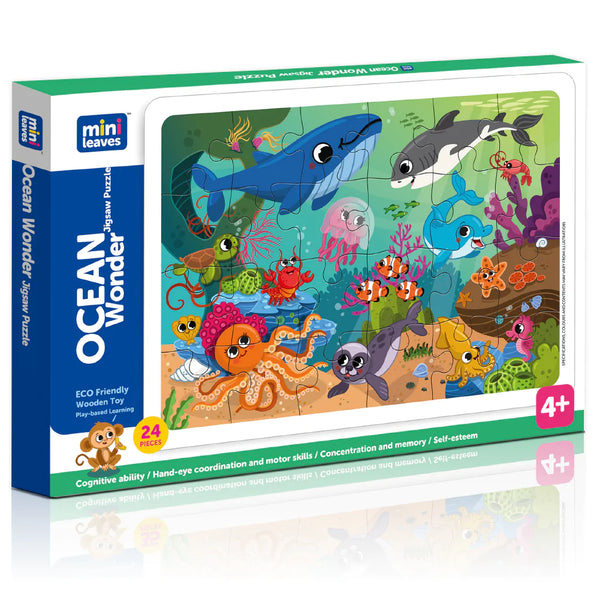
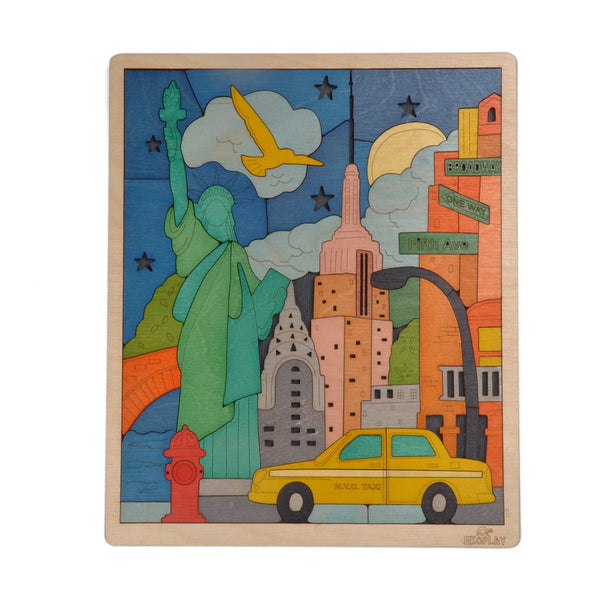
- 5 to 6 years: 24 to 50 piece wooden jigsaws.
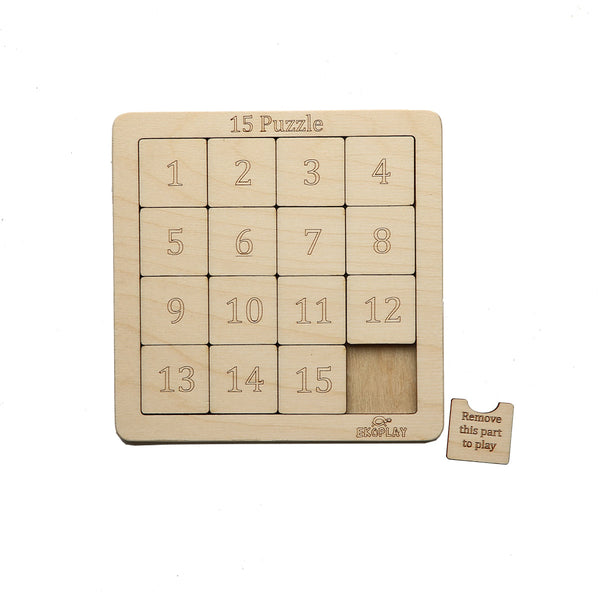
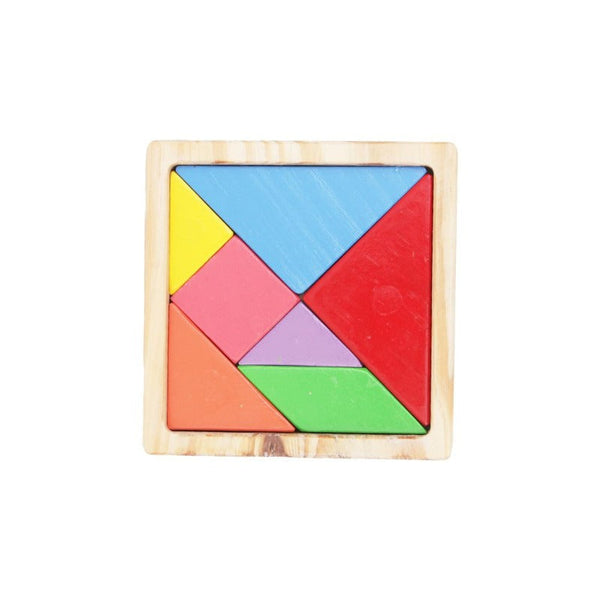
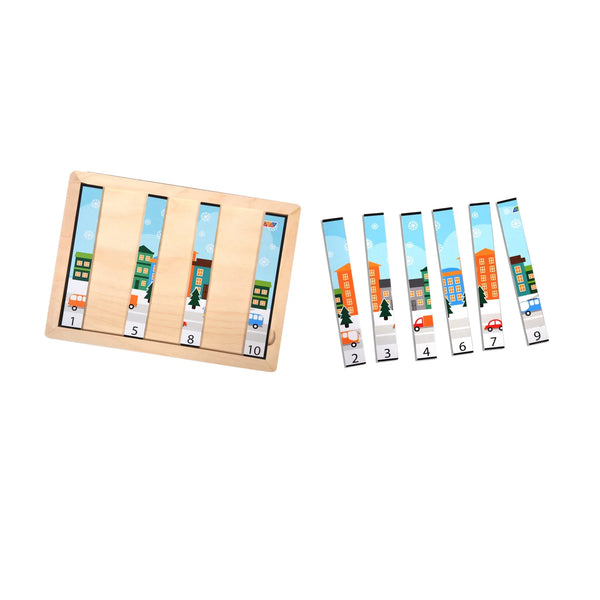
- 7 plus years: 60 to 100 piece, brain teasers, sliding puzzles.
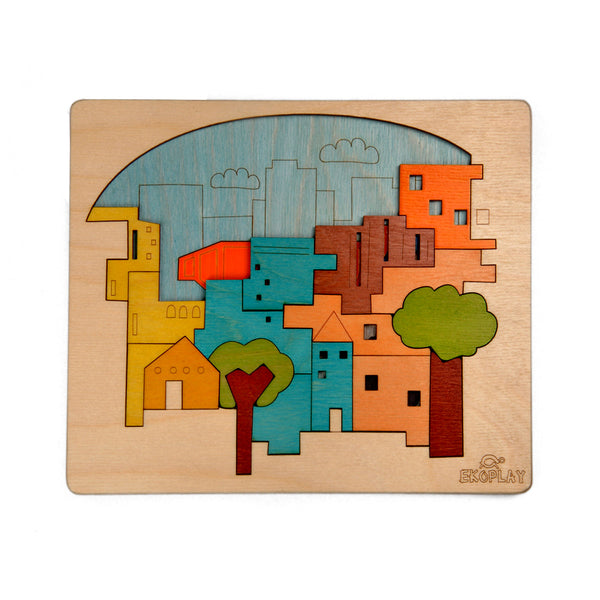
Wood beats cardboard for under 5
- Wooden pieces survive being dropped, chewed, stepped on.
- Cardboard pieces bend and frustrate small hands.
- Wood is silent. Cardboard rustles. Wood feels real.
Skip these common mistakes
- Buying ahead of age: a 24-piece puzzle for a 2-year-old goes in the bin in two minutes.
- Buying too many at once: rotation beats abundance.
- Helping too much: the child gets the dopamine of finishing only if they do most of the work.
- Buying screen-based puzzle apps for under 5: they undo the hand-brain work physical puzzles build.
Use Indian context puzzles
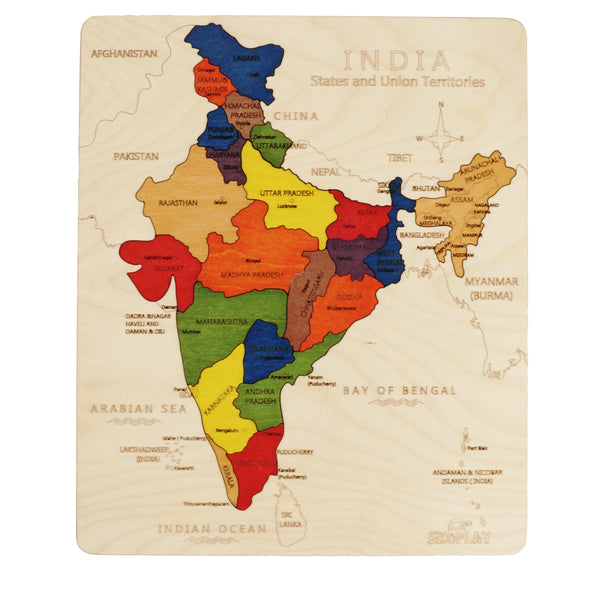
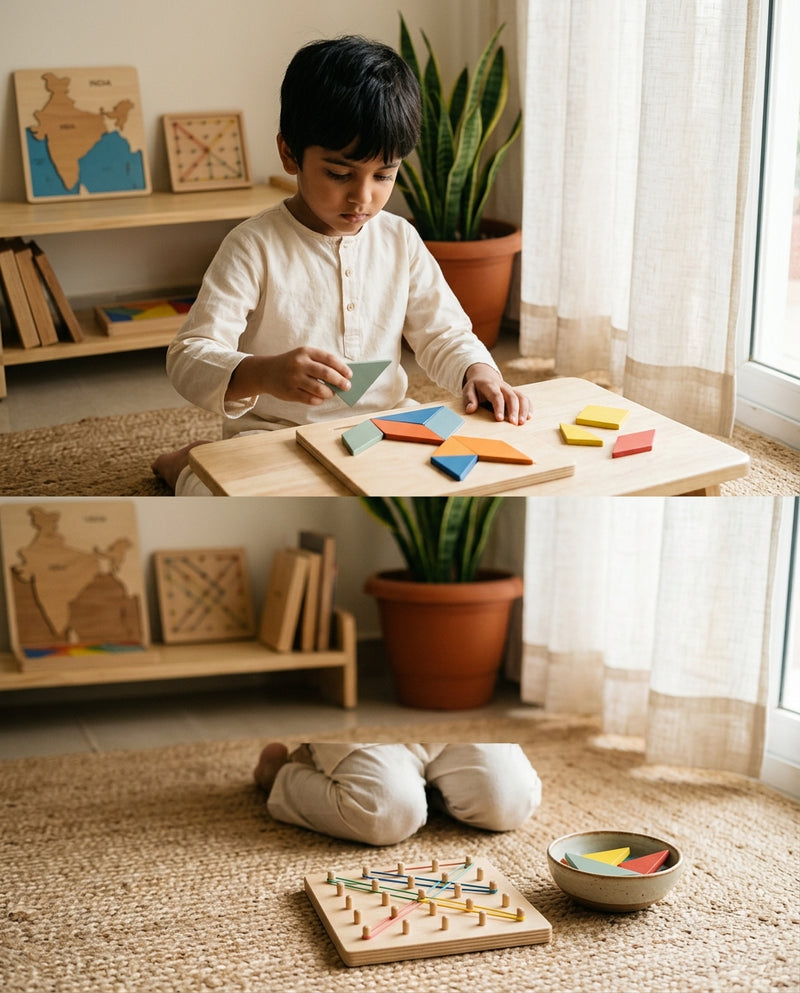
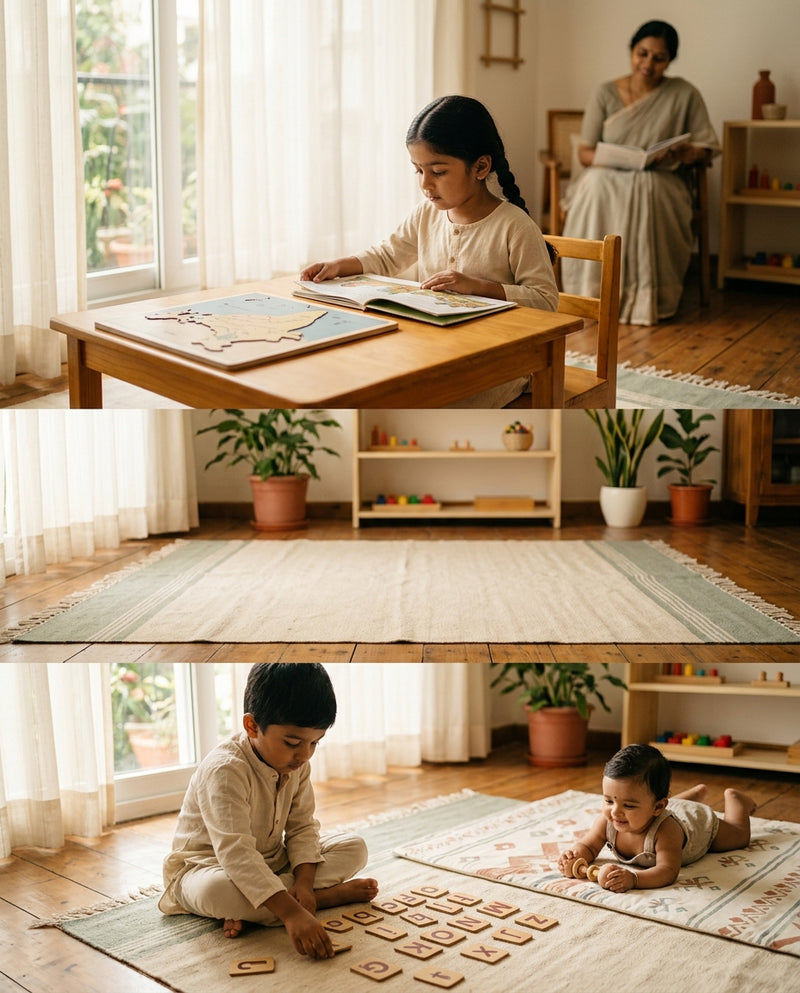
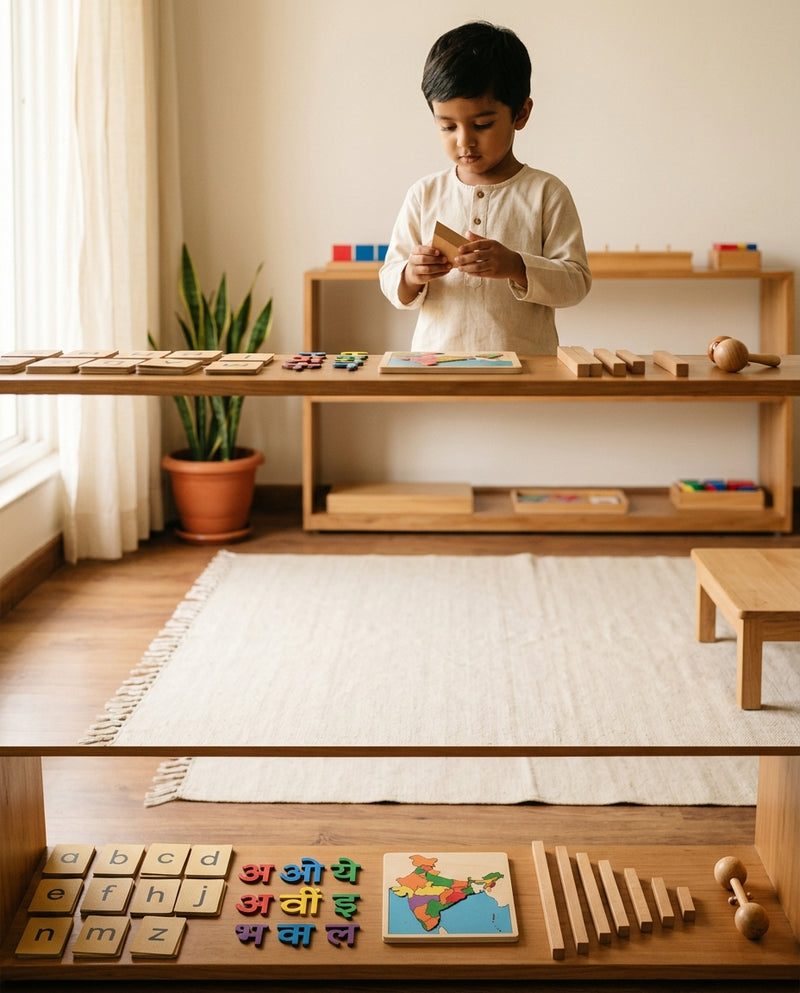
- India map puzzle teaches all 28 states better than any school book at 5 to 6.
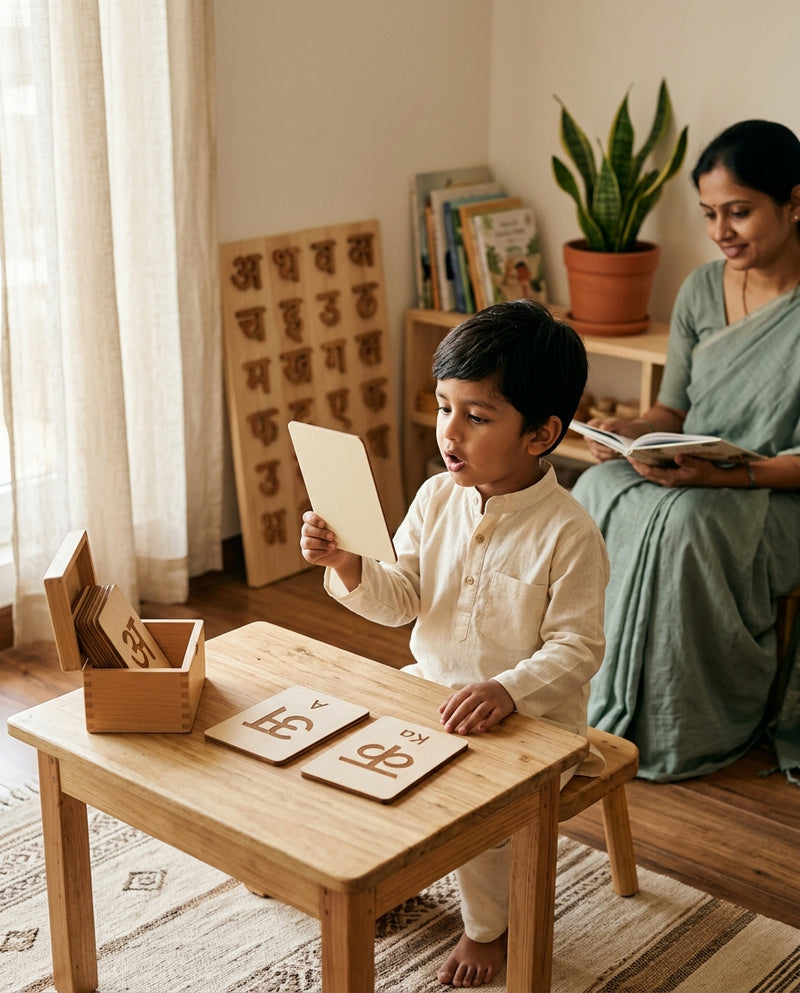
- Hindi and regional alphabet puzzles give early bilingual reading exposure.
- Indian wildlife puzzles connect the child to local species, not just imported safari animals.
Budget guidance
- 2 to 3 years: 3 to 4 chunky puzzles, Rs. 1,500 to Rs. 2,500 total.
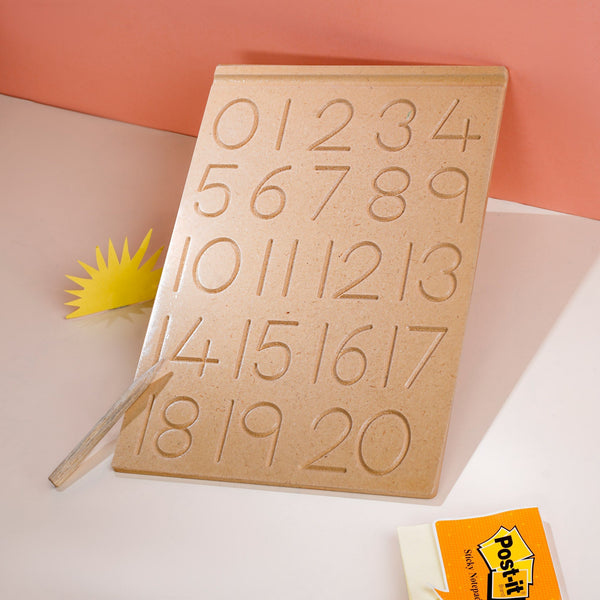
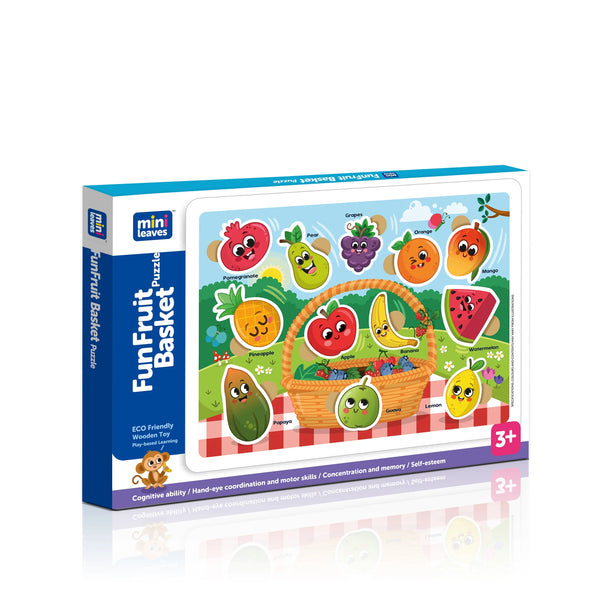
- 3 to 5 years: add 5 to 7 tray puzzles + learning boards, Rs. 3,000 to Rs. 5,000 over two years.
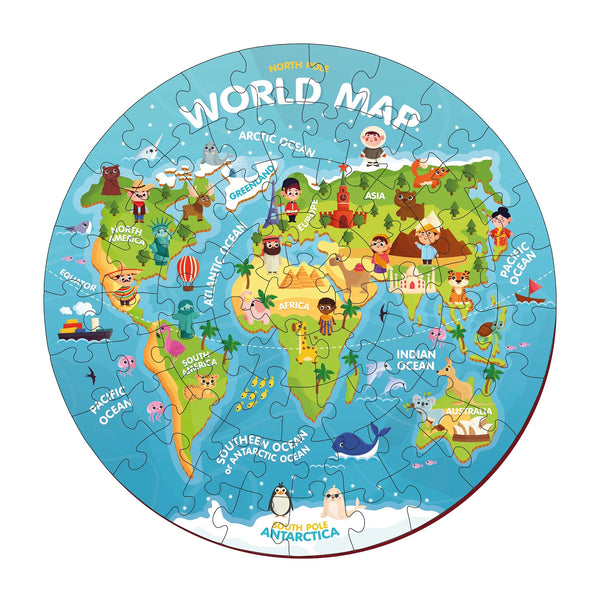
- 5 to 8 years: India map + world map + jigsaws + brain teasers, Rs. 4,000 to Rs. 6,000 over three years.
Skills this shelf builds
What does a well-chosen puzzle shelf actually build? Far more than parents assume. Puzzles are the closest a toy comes to pure cognition.
Spatial reasoning
- Rotation and orientation: turning pieces mentally before placing them.
- Edge matching: noticing which side fits where.
- Whole-from-parts thinking: holding the final image in mind while building it.
Vocabulary and knowledge
- Animals, vehicles, plants, professions: named through repeated handling.
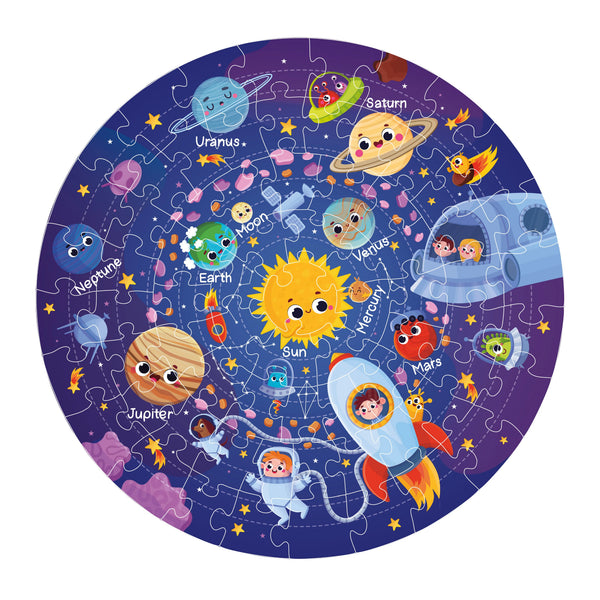
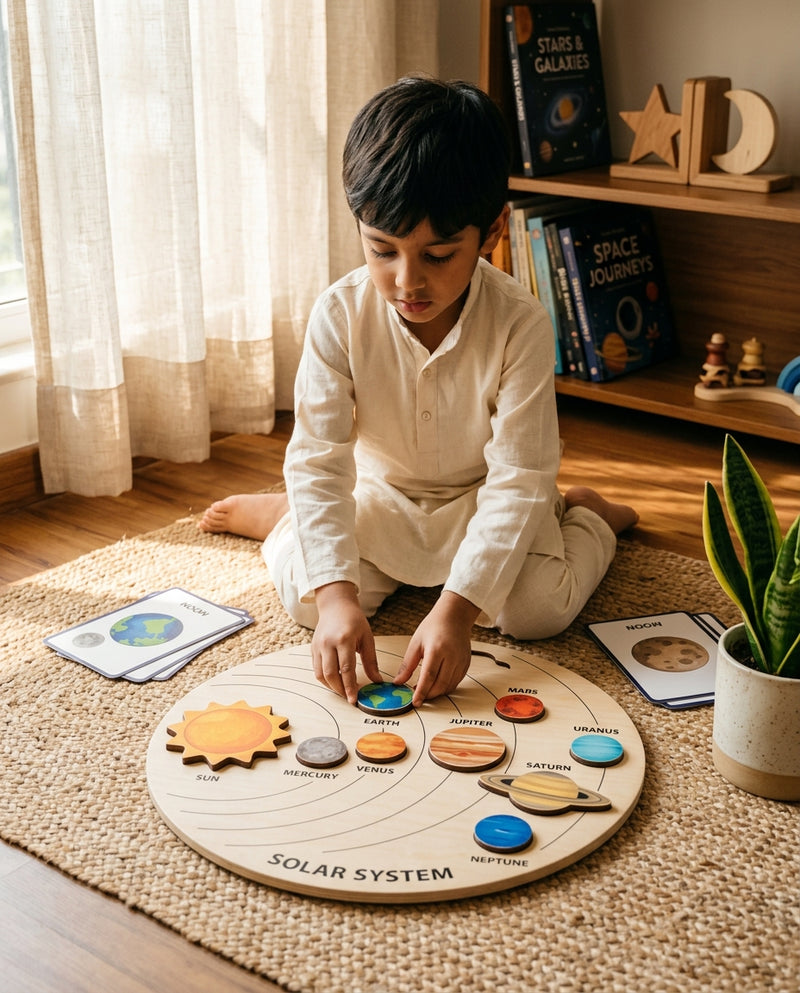
- Geography: Indian states, world countries, continents, planets.
- Language: Hindi varnamala, English alphabet, regional scripts.
Problem solving
- Trial and error: trying, failing, trying differently.
- Process learning: strategy beats brute force.
- Persistence: sitting with a hard puzzle until it gives in.
Fine motor
- Precision pincer grip from knob pieces.
- Controlled placement with small jigsaw pieces.
- Two-hand coordination on large board puzzles.
Concentration
- Sustained attention: a well-matched puzzle holds a child for 20 to 40 minutes.
- Resistance to distraction: the puzzle becomes the world.
- Completion drive: the pull to finish what is started.