Solar System and Space Toys & Games
Parent's buying guide
How to choose space toys:
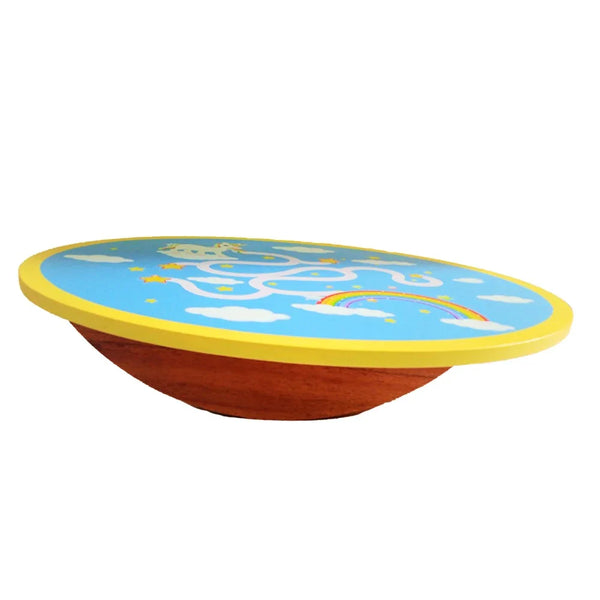
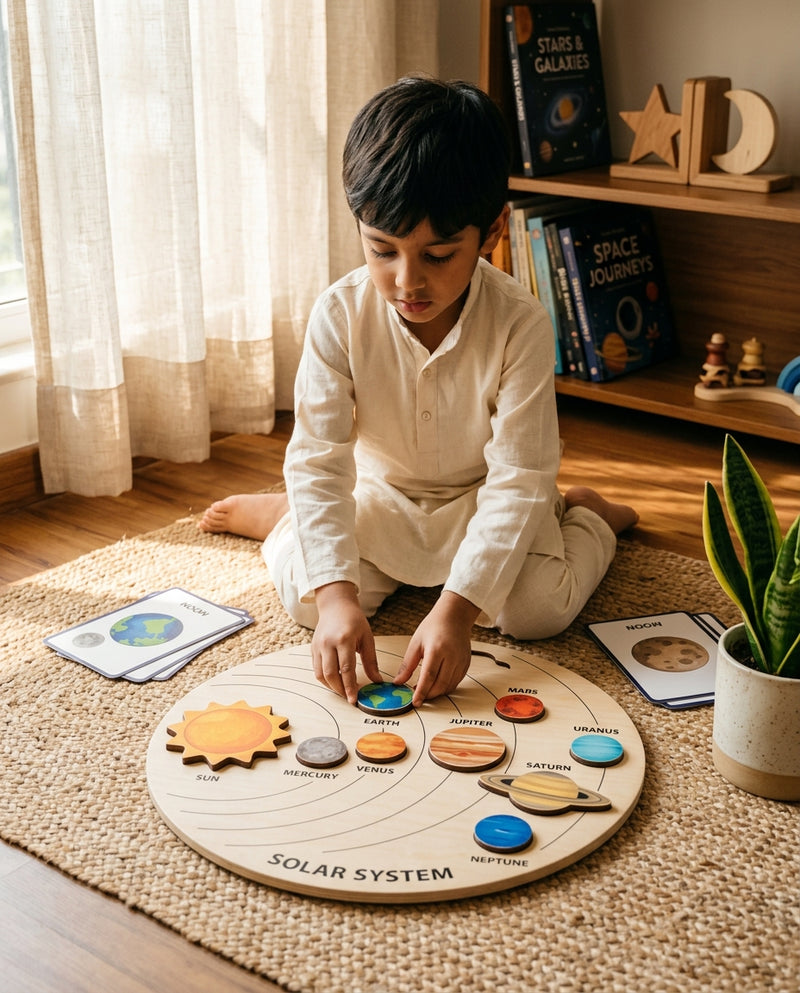
For 4 to 7 first space exposure: Solar System Flashcard with Wooden Planets (the all-in-one starter), Solar System Wooden Jigsaw Puzzle, Solar System Puzzle Learning Board. Each teaches a different aspect of solar system understanding.
For 6 to 9 advanced puzzles: Solar System 108-piece Jumbo Jigsaw Puzzle for serious puzzle work. Wooden Man on the Moon Puzzle Board for lunar-mission themes.
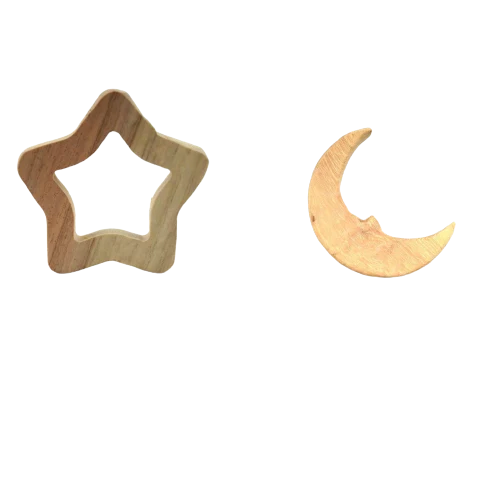
For nursery decor with developmental purpose: Wooden Bookends Star and Moon (styled bookshelf piece). Neem Wood Star Moon and Cloud Teethers and Star and Moon Teethers (for babies 6-12 months, traditional Indian neem safety).
For ISRO-fan families: pair Solar System Flashcard with Wooden Planets (Rs 495) with library books on Chandrayaan and Mangalyaan. India's space achievements + hands-on solar system play = ignited curiosity.
Practical tip: pair space toys with star-gazing nights on the apartment terrace. Naming a real planet your child can see in the night sky cements the learning forever.
Skills this shelf builds
What space toys build:
Planet names and solar system order. Children handle each planet (correctly coloured and proportioned) and learn their names through repeated puzzle play. By age 6-7 the eight planets and their order are second nature.
Spatial scale concepts. Jigsaw puzzles teach the relative sizes (Jupiter is huge, Mercury is small) and relative positions. The foundation of all later astronomy and physics understanding.
STEM curiosity ignited. Children who develop space fascination early often carry STEM interest through school - which in modern India (with ISRO leading global space achievements) creates real career-pathway possibilities.
CBSE/ICSE EVS and science alignment. Solar system enters Indian school curriculum in class 3-5 EVS and class 6+ science. Children with space toys at home walk into these chapters as already-familiar territory.